Why Cats Love Boxes: What the Science Actually Says
Every cat owner has seen it: a $60 cat bed ignored while the cat curls up in the cardboard box it came in. There's a real reason, backed by peer-reviewed research.
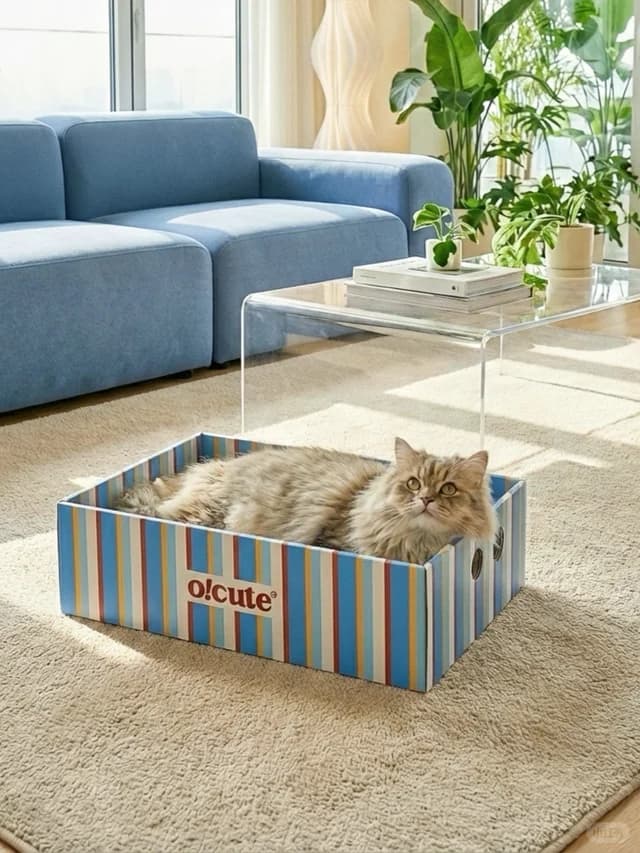
Every cat owner has experienced it. You spend $60 on a beautiful cat bed. Your cat walks over, sniffs it, and promptly settles into the cardboard box the bed came in. It's one of the internet's favorite running jokes — but it turns out there's real science behind it.
The most widely cited study on this comes from Vinke, Godijn, and van der Leij (2014), published in Applied Animal Behaviour Science. The Dutch research team ran a randomized controlled trial on 19 newly arrived shelter cats — some got a hiding box, some didn't — and measured their stress levels using a validated Cat-Stress-Score as well as body weight recovery.
The finding that changed how shelters design cat enclosures
The cats with hiding boxes recovered from the stress of arrival at least four days earlierthan the cats without. Their stress scores dropped faster, they ate more, and they showed more relaxed body language within the first three days. The boxes didn't just give them a place to sleep — they materially reduced a stress response that otherwise would have taken the rest of the week to settle.
The 2014 study has been replicated and expanded since, including a 2019 PLOS ONE randomized controlled trial by van der Leij, Selman, Vernooij, and Vinke that confirmed the effect on a larger sample and also documented improvements in body weight recovery. Hiding boxes are now an evidence-based recommendation for any newly introduced cat.
Why boxes specifically?
Cats are ambush predators by nature. In the wild they don't run from conflict — they hide, assess, and then decide whether to flee or engage. A box gives them something they can't get from an open bed:
- Three walls and a roof. Most of the cat is hidden, but they still have a single opening to watch the room. That matches how cats naturally prefer to observe the world.
- Tight walls.The sides of a box gently press against a cat's body. This is the same principle behind swaddling a baby — physical contact on multiple sides is calming to mammals generally.
- Thermal insulation. Cardboard is a surprisingly good insulator. A cat in a box is warmer than the same cat on an open cushion, which matters because cats have a higher thermoneutral zone than humans (more on that in our other warm-spot article).
It's not just free cardboard boxes
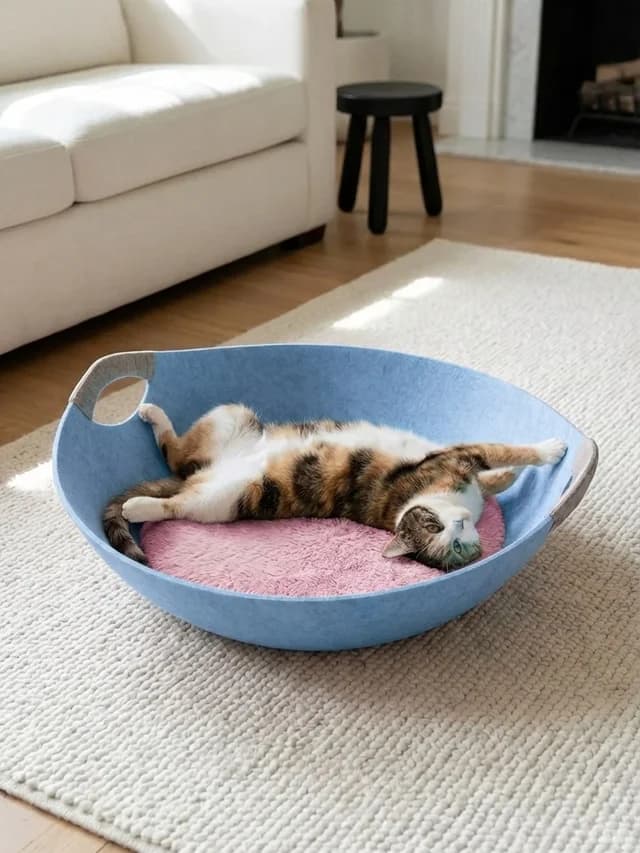
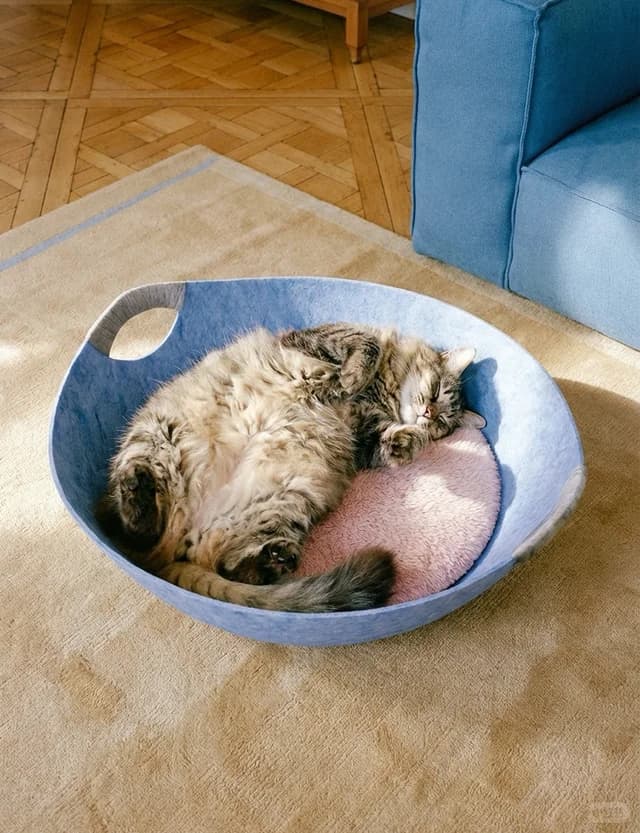
The takeaway isn't that you should just give your cat random Amazon boxes and call it a day (though they'll happily accept them). It's that the shape is what matters. A cat bed that mimics the enclosed, walled-in feeling of a box will get dramatically more use than an open cushion, regardless of price.
This is exactly why deep bowl beds and box-shaped cat nests outperform flat pads in almost every real-world test. Our Hexagon Cat Nest and 3-in-1 Scratch Box are designed around this principle: enclosed enough to trigger the "hiding box" response, open enough for your cat to see out.
One more perk: boxes might be an anxiety tool
The 2014 Vinke paper wasn't just interesting because boxes feel nice. It was important because it suggested that providing an enclosed retreat could actively reduce cortisol, the main stress hormone in mammals. That has implications beyond shelters: cats in new homes, cats with a new baby in the house, cats at the vet, and cats after a move can all benefit from having a box-shaped hideaway available.
If your cat has been acting stressed lately — more hiding, less eating, more hyper-vigilance — adding an enclosed bed somewhere quiet is one of the cheapest, most evidence-backed interventions you can try.
The short version
Cats aren't being silly when they pick the box over the bed. They're being cats, and decades of feline welfare research support them. If you want your cat to actually use a bed, stop fighting the instinct — lean into it. Buy a bed that feels like a box.
Sources & Further Reading
- Vinke, C.M., Godijn, L.M., van der Leij, W.J.R. (2014). Will a hiding box provide stress reduction for shelter cats? Applied Animal Behaviour Science, 160, 86–93.
- van der Leij, W.J.R., Selman, L.E., Vernooij, J.C.M., Vinke, C.M. (2019). The effect of a hiding box on stress levels and body weight in Dutch shelter cats: a randomized controlled trial. PLOS ONE, 14(10).
Products Mentioned
 Only 0 left
Hexagon Cat Nest
Geometric hexagonal bed with built-in scratch surfaces
Low stock: 0 left
 Only 0 left
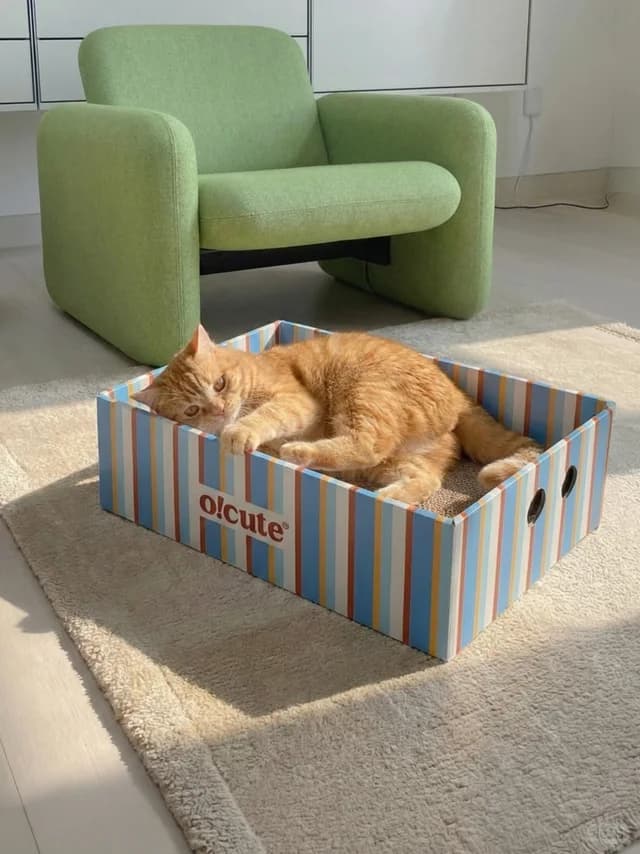
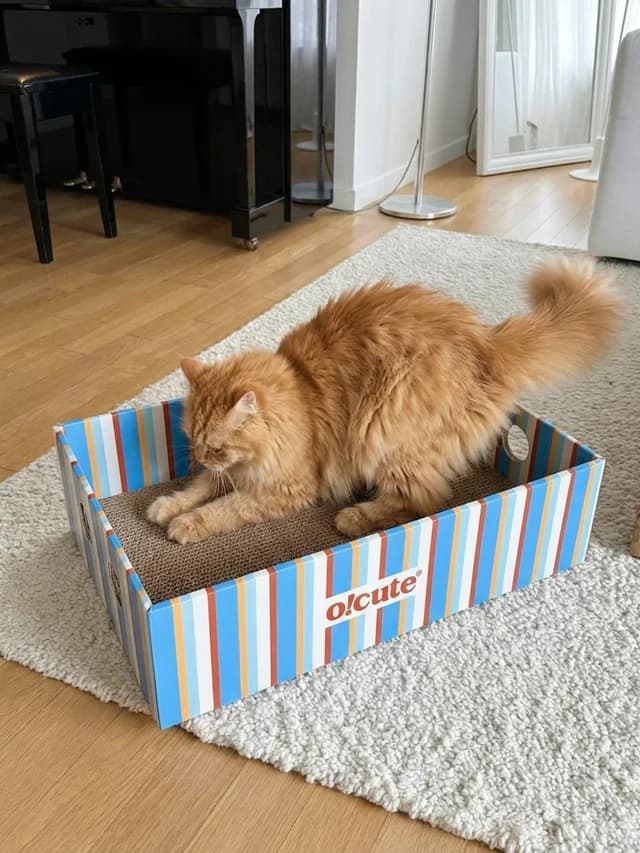
3-in-1 Scratch Box
Scratcher + bed + play box in one colorful package
Low stock: 0 left
 PopularOnly 0 left
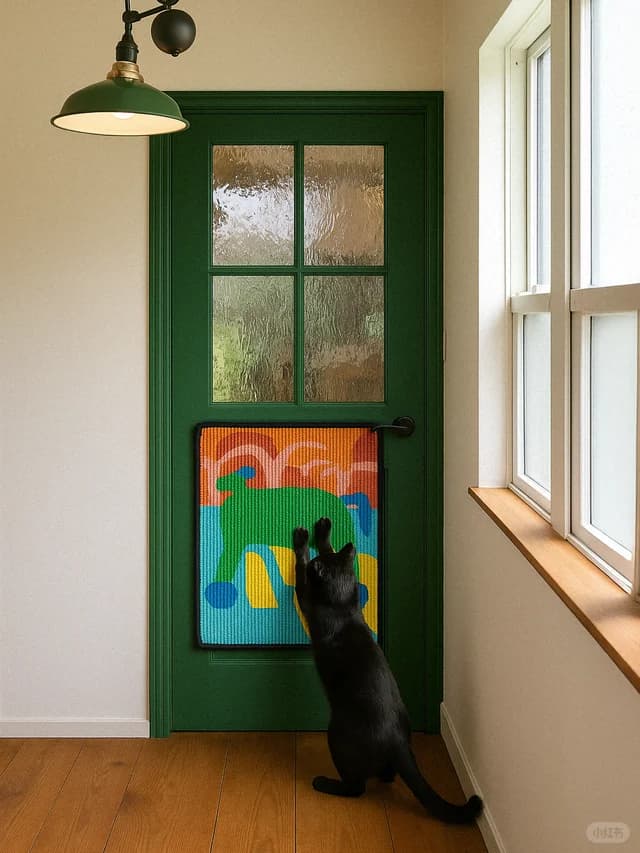
Striped Scratch Box
Colorful striped box with corrugated scratch pad inside
Low stock: 0 left