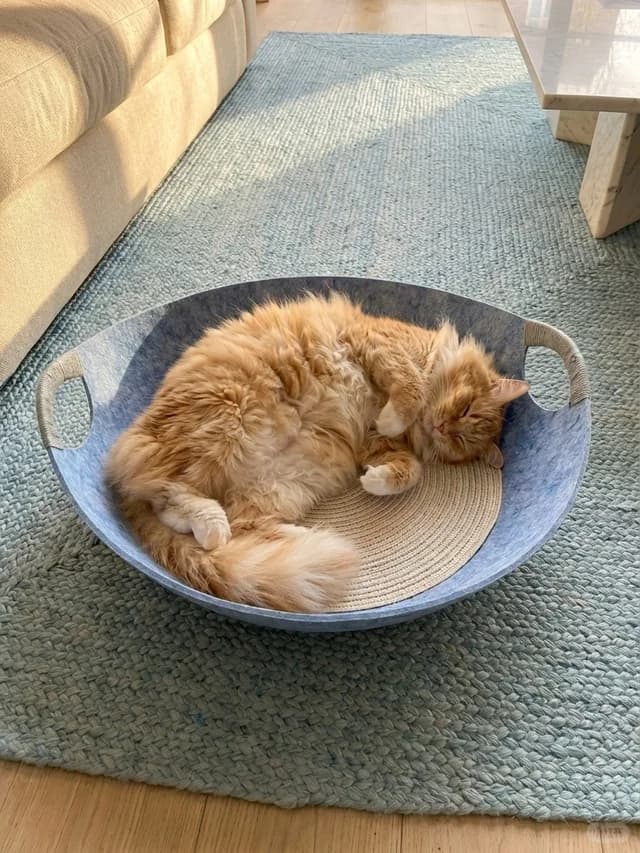
How Many Hours Do Cats Sleep? (And What That Means for Their Bed)
If your cat seems to sleep all the time, that's not laziness — it's biology. Understanding feline sleep patterns changes how you pick and place a cat bed.
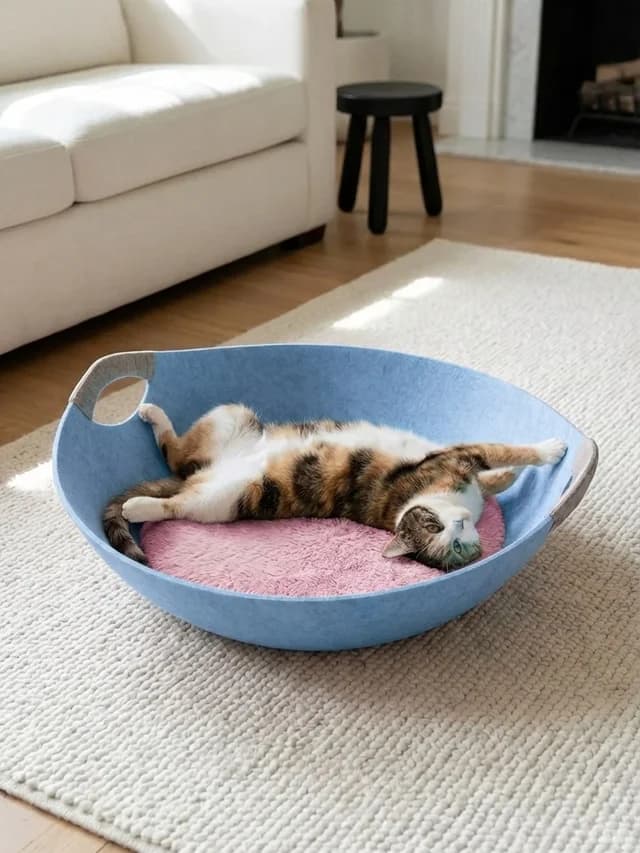
If you've ever looked at your cat at 3 p.m. and thought "is this normal?" — yes, it is. Adult cats sleep roughly 15 to 20 hours per day, according to the Cornell Feline Health Center. That's about twice as much as humans, and it's a direct result of how cats evolved.
But that number hides a more interesting fact. Cats don't sleep in one long overnight block the way we do. They nap in short bursts throughout the day and night, with peak activity at dawn and dusk. Understanding that pattern — not just the hour count — is what makes a cat bed actually get used.
Why cats sleep so much
Cats are crepuscular predators, which is a fancy way of saying they're built to hunt at low light. Hunting is metabolically expensive. In the wild, cats would stalk and kill something small, eat, and then conserve energy for the next hunt. Sleeping 15+ hours a day is how their bodies finance the few minutes of extreme activity that used to mean survival.
Indoor cats no longer hunt, but the pattern is still hardwired. They nap. They pounce on a toy. They nap again. And then they sprint around the house at 10 p.m. for no reason ("the zoomies" — crepuscular activity, right on schedule).
The three types of cat sleep
Not all feline sleep is the same. Research on cat sleep cycles dates back to the 1960s, when cats were actually a key model species for sleep research because their REM cycles are so pronounced. Three main states matter for bed design:
- Light sleep / drowsing (about 70% of sleep time). Cats sleep with ears slightly twitching and wake up at the smallest sound. In this state they still want to feel safe and elevated.
- Deep sleep / REM (about 30%).Paws twitch, whiskers move, the cat is fully relaxed. This is when they're genuinely vulnerable — and when a walled bed that blocks drafts and sight lines is most valued.
- "Cat loaf" resting. Not technically sleep, but the default low-energy pose. Cats can hold it for hours. They prefer warm, slightly elevated, enclosed spots.
What this means for bed choice
If your cat is sleeping 15–20 hours a day, the bed you buy is essentially their primary piece of furniture. It gets more use than your sofa. A few practical implications:
- Get more than one bed.Cats move throughout the day — a sunny morning spot, a cozy evening spot, a hidden daytime spot. The AAFP's 2013 Feline Environmental Needs Guidelines specifically recommend providing multiple rest areas, ideally at different heights, as one of the five pillars of feline welfare. More on those guidelines here.
- Pick a bed with walls. Cats prefer partial enclosure, especially during REM sleep. Bowl beds like our Bowl Cat Bed or deeper geometric beds like the Hexagon Cat Nest match this preference far better than flat pads.
- Put at least one bed near a window. Warm sunlight is irresistible to a crepuscular animal that sleeps most of the day. A bed in a sunbeam gets used three times as much as the same bed in shade.
- Avoid high-traffic zones. Cats in deep sleep are vulnerable and will simply not use a bed in a noisy hallway. Bedrooms, living rooms, and quiet corners work much better.
Kittens and seniors sleep even more
Kittens under 6 months can sleep 20+ hours, and senior cats (over 10) also sleep significantly more than adult cats as their metabolism slows. If you have a senior cat, prioritize warmth and joint support — deep bowl beds with padded insides are usually a better fit than firm flat pads.
When sleep is a red flag
15–20 hours of sleep is normal. What's not normal is a sudden change — a cat who previously was active and playful sleeping noticeably more, or a cat who seems to sleep more deeply and is harder to rouse. Both can indicate pain, hyperthyroidism, or other health issues. If you notice a change, talk to your vet.
The bottom line
Your cat sleeps more than you do, in shorter bursts, across multiple spots. Design around that instead of fighting it. Two or three beds, in different parts of the home, at different heights, matching different mood states, will always get more use than one fancy expensive bed in the living room.
Sources & Further Reading
Products Mentioned
 Best SellerOnly 0 left
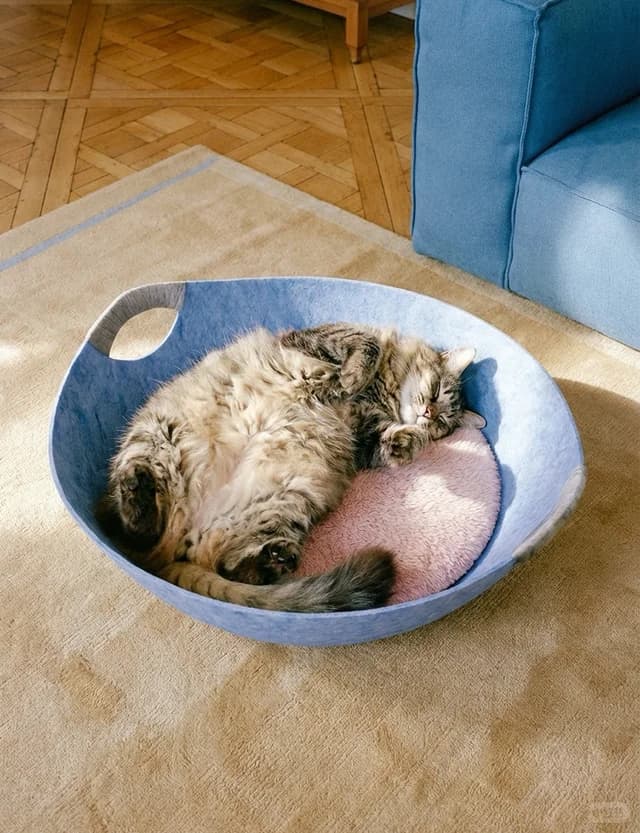
Bowl Cat Bed
Premium woven felt bowl bed — your cat's favorite nap spot
Low stock: 0 left
 Spring EditionOnly 0 left
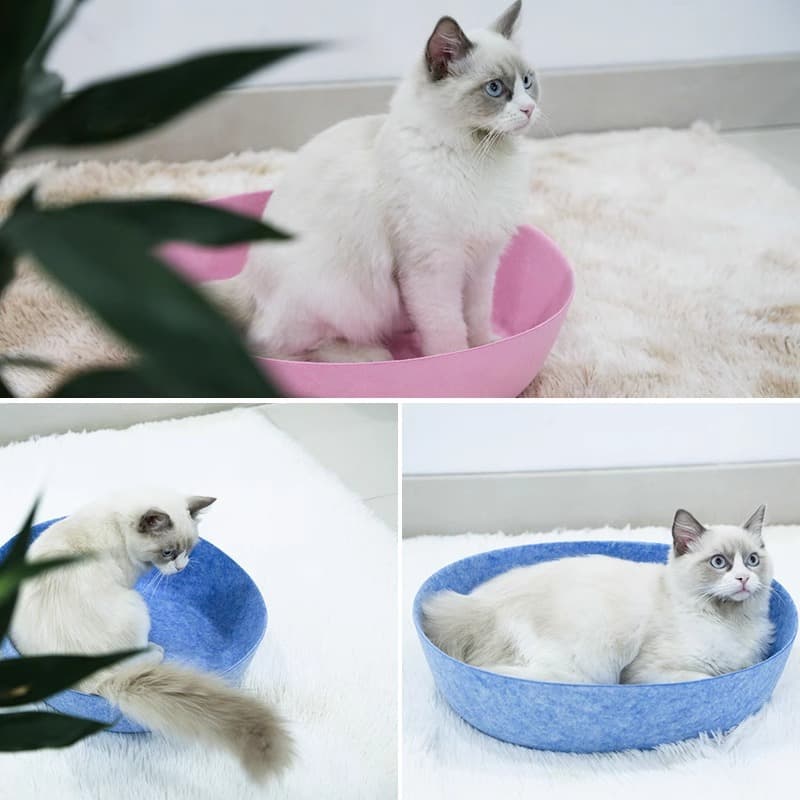
Pink Felt Bowl Bed
Spring edition blush pink bowl bed in premium felt
Low stock: 0 left
 Only 0 left
Hexagon Cat Nest
Geometric hexagonal bed with built-in scratch surfaces
Low stock: 0 left