The 5 Pillars of a Healthy Cat Environment (AAFP Guidelines Explained)
Most cat owners have never heard of the AAFP/ISFM Five Pillars. They should have. These are the evidence-based minimum standards for a cat's physical and emotional wellbeing.
Most cat owners have never heard of the AAFP Five Pillars. They should have. It's the single most important evidence-based document on what every indoor cat actually needs — written by a panel of feline vets, behaviorists, and welfare researchers, and published in a peer-reviewed veterinary journal.
The full paper is Ellis, Rodan, Carney, Heath, Rochlitz, Shearburn, Sundahl, and Westropp (2013). "AAFP and ISFM Feline Environmental Needs Guidelines." Journal of Feline Medicine and Surgery, 15(3), 219–230. It was jointly released by the American Association of Feline Practitioners (AAFP) and the International Society of Feline Medicine (ISFM). More than a decade later, it's still the baseline that cat behavior professionals refer to.
Here's what the Five Pillars actually say, in plain English, and what they mean for how you set up your home.
Pillar 1: Provide a safe place
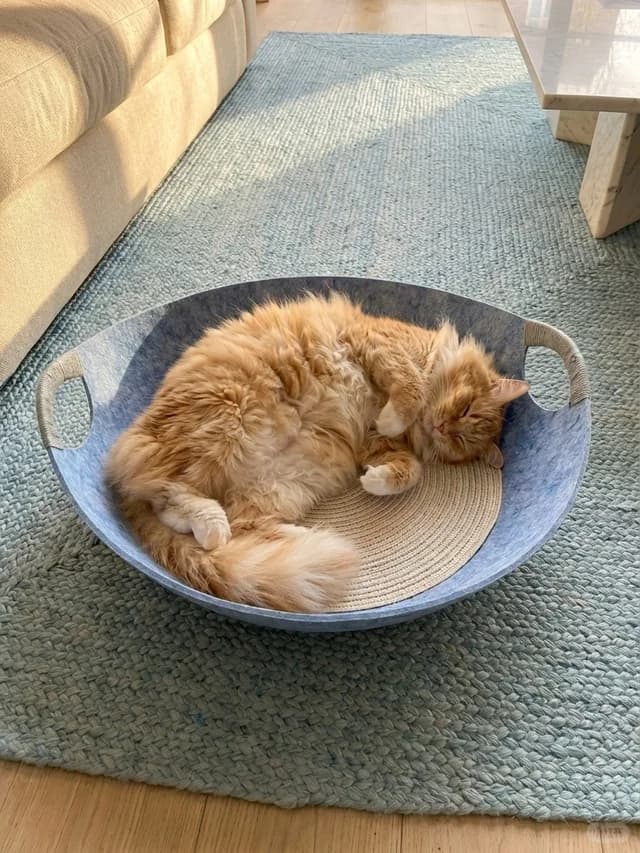
Every cat needs at least one private, enclosed spot where they can retreat and feel hidden. This isn't optional or a nice-to-have — the guidelines treat it as essential for feline welfare. The research backing this pillar is strong: the Vinke et al. (2014) shelter hiding-box study showed hiding spots literally reduce measurable stress responses in cats. We covered that study in detail in our "why cats love boxes" article.
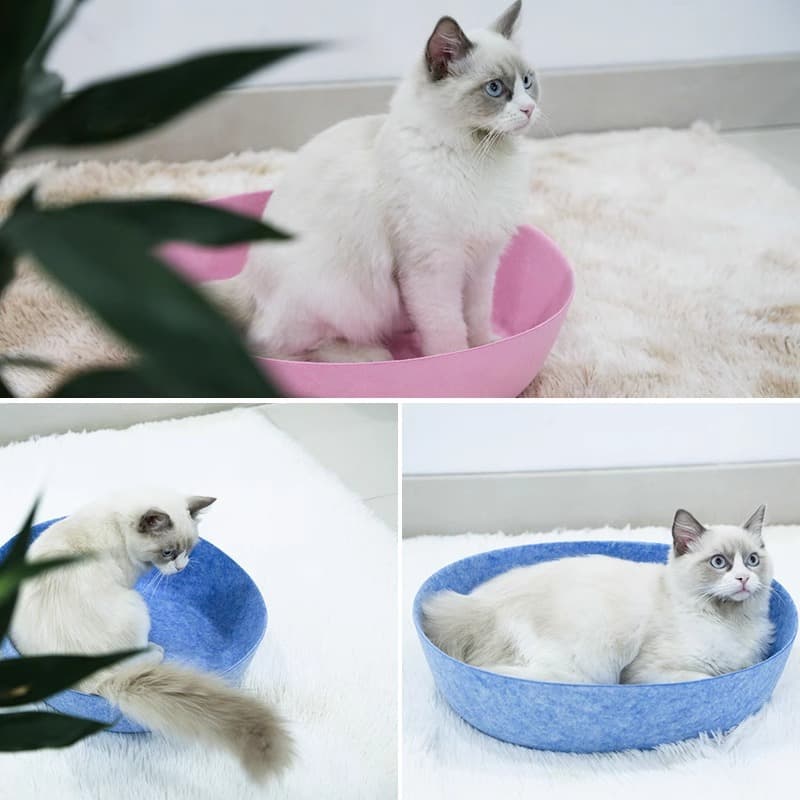
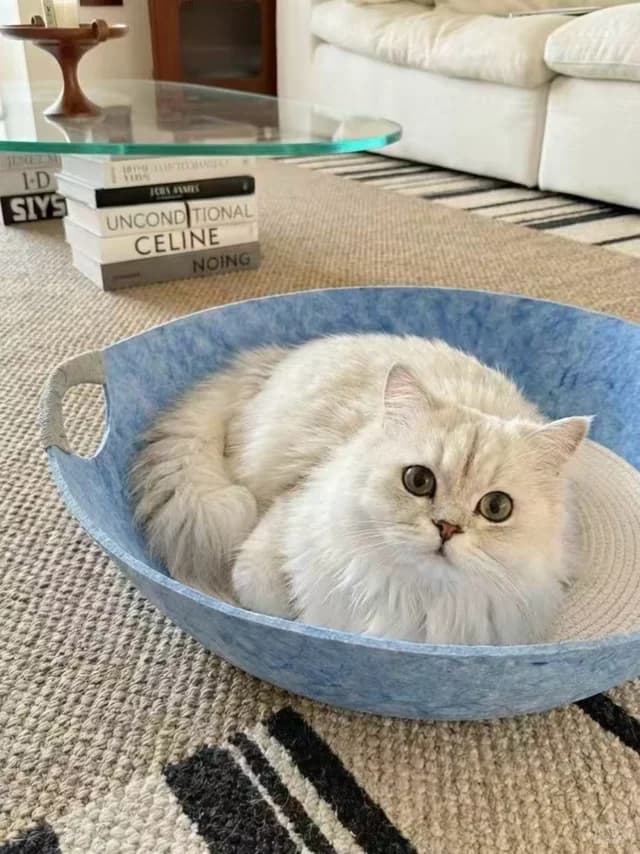
How to apply it: A deep bowl bed, hexagon nest, or covered cat cave — anything with three walls and a roof — counts. Put at least one in a quiet area away from foot traffic.
Pillar 2: Multiple and separate key environmental resources
The guidelines specifically list these as "key resources":
- Food and water bowls
- Litter boxes
- Scratching areas
- Play areas
- Resting/sleeping areas
The rule: each cat should have access to these resources, and they should be in separate locations. In multi-cat households, the rule of thumb is "n + 1" for critical resources — for every n cats, provide n + 1 of each. Two cats? Three litter boxes, three scratchers, three water stations.
This isn't arbitrary. Clustered resources create competition and stress, which drives behavior issues (inappropriate elimination, aggression, over-grooming). Separating them gives each cat unhindered access.
How to apply it:Don't just have one cat bed and one scratcher. Spread them out. A cat that has a hexagon nest in the living room, a bowl bed in the bedroom, and a wall scratcher in the hallway is meeting this pillar far better than a cat with everything stacked in one corner.
Pillar 3: Opportunity for play and predatory behavior
Cats are obligate predators. They're biologically wired to stalk, chase, pounce, and grab. When they don't get opportunities to act out this sequence, the energy comes out as over-grooming, redirected aggression, or destructive play.
The guidelines recommend daily interactive play sessions that mimic hunting — meaning play that lets the cat stalk, chase, and "catch" something. Wand toys and feather-on-a-string toys work, laser pointers less so (they're frustrating because the cat never "catches" the prey). Two short play sessions a day (5–10 minutes each) is the minimum recommendation.
Pillar 4: Positive, consistent, predictable human interaction
Cats don't bond with humans the same way dogs do, but they do form strong individual attachments — as long as the interactions are on their terms. This pillar recommends:
- Letting the cat initiate contact
- Short, frequent interactions instead of long forced cuddles
- Predictable routines for feeding, play, and rest
- Respecting the cat's preferred interaction style
The word "predictable" matters here. Cats get stressed by unpredictable humans — loud guests, erratic schedules, forced handling. Consistency is part of their environmental welfare.
Pillar 5: Respect the cat's sense of smell
Cats live in a world defined by scent more than humans understand. Scent marks from their own cheek glands, paw glands, and urine are how they feel at home in a space. The guidelines explicitly warn against over-cleaning — wiping down every surface with strong disinfectants can erase the cat's own reassuring scent markers and cause stress.
Practical implications:
- Avoid strong air fresheners, plug-ins, and citrus or eucalyptus cleaners (most cats actively dislike these smells).
- Don't aggressively wash cat beds every week — the cat's own scent on the bed is part of what makes it comforting.
- When moving or rearranging, keep something scented (a bed, blanket) unchanged to anchor the cat.
Why this document matters more than Instagram advice
Almost every evidence-based feline welfare recommendation you'll read in the past decade cites the AAFP Five Pillars. When a veterinarian or behaviorist talks about "environmental enrichment" for cats, they almost always mean these five principles. The Ohio State University Indoor Pet Initiative, which is another widely respected resource, explicitly builds on this framework (Ohio State Indoor Pet Initiative).
The short version
If you set up your home around these five principles, you'll solve 90% of the behavior problems that drive cat owners up a wall. A safe hiding spot, separated resources, daily hunting-style play, predictable human contact, and respect for scent. The furniture you buy — beds, scratchers, climbing surfaces — should all be chosen to support these pillars, not replace them.
Sources & Further Reading
- Ellis, S.L.H., Rodan, I., Carney, H.C., Heath, S., Rochlitz, I., Shearburn, L.D., Sundahl, E., Westropp, J.L. (2013). AAFP and ISFM Feline Environmental Needs Guidelines. Journal of Feline Medicine and Surgery, 15(3), 219–230.
- The Ohio State University Indoor Pet Initiative — Cats.
- American Association of Feline Practitioners — 2013 Environmental Needs Guidelines resource page.
Products Mentioned
 Best SellerOnly 0 left
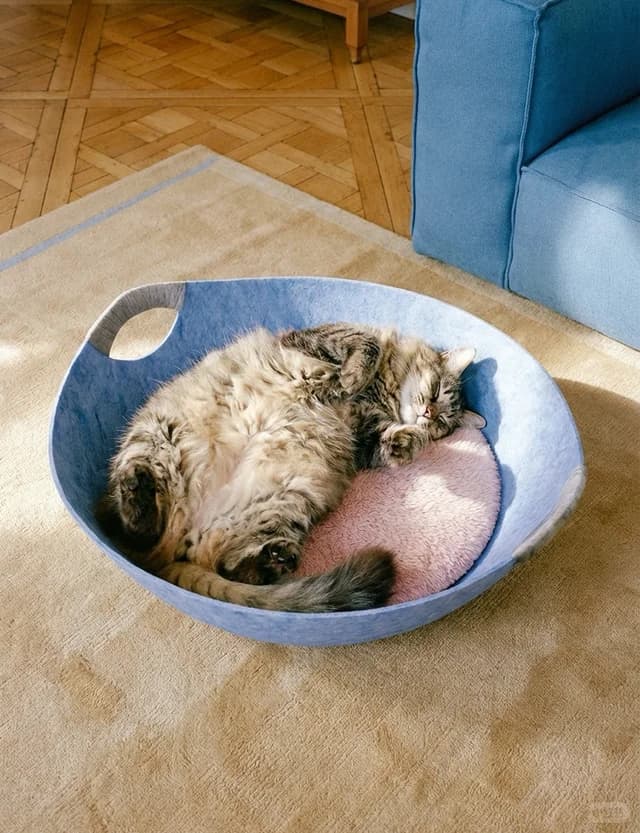
Bowl Cat Bed
Premium woven felt bowl bed — your cat's favorite nap spot
Low stock: 0 left
 NewOnly 0 left
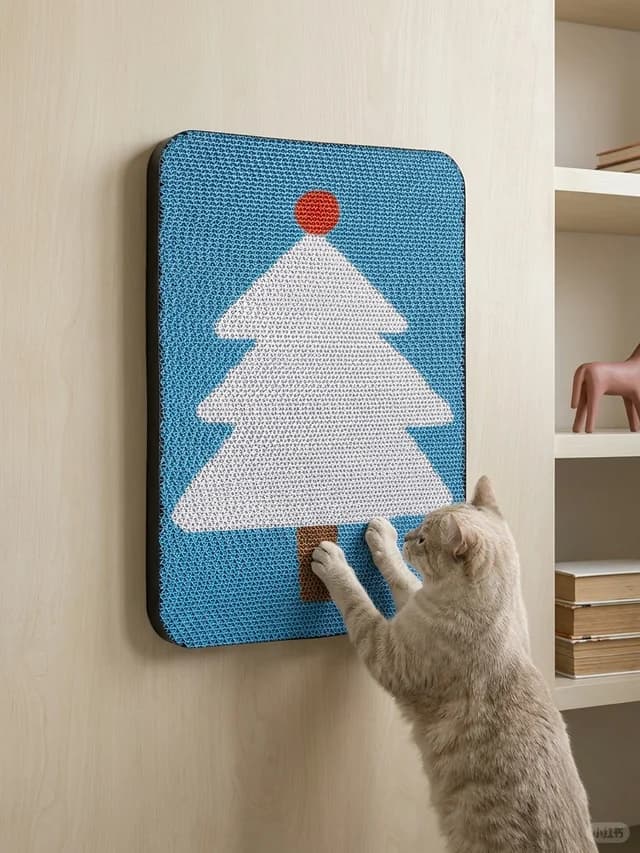
Tree Wall Scratcher
Christmas tree-shaped knitted wall scratcher — functional wall art
Low stock: 0 left
 Only 0 left
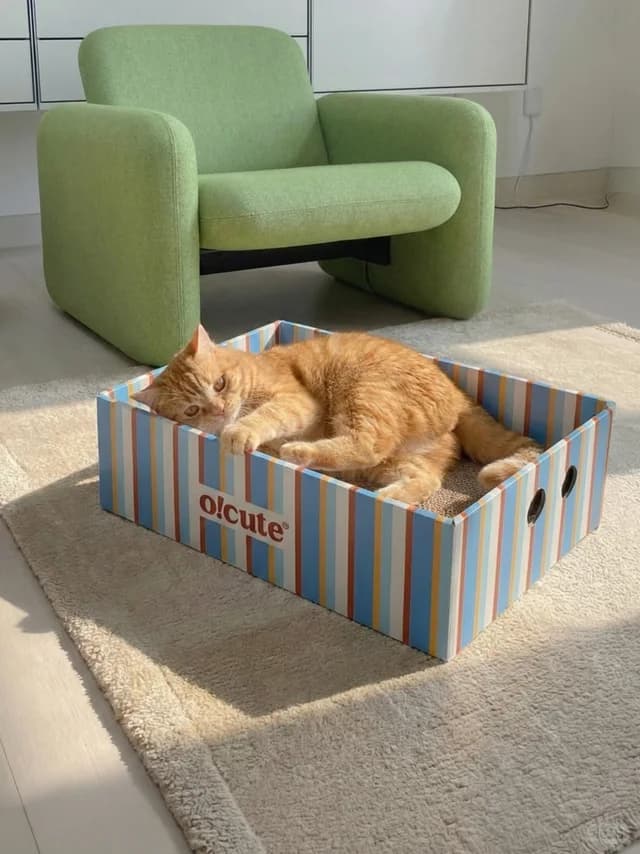
Hexagon Cat Nest
Geometric hexagonal bed with built-in scratch surfaces
Low stock: 0 left