Best Cat Beds for Senior Cats with Arthritis: What Vets Actually Recommend
Your senior cat isn't just slowing down. Arthritis affects 90% of cats over 12, and the bed they sleep in 18+ hours a day can either help or hurt.
If your older cat has started avoiding the windowsill she once loved, or hesitates before jumping onto the couch, there's a good chance arthritis is the reason. Feline osteoarthritis is far more common than most owners realize — and the right bed can make a genuine difference in your cat's daily comfort.
This guide covers what veterinarians actually recommend for arthritic cats, which bed features matter most, and which popular claims don't hold up to scrutiny.
How common is arthritis in cats?
More common than you'd think. Studies using radiographic evidence have found that roughly 60% of cats show signs of degenerative joint disease by age 6, and up to 90% by age 12. The tricky part is that cats are masters at hiding pain. Unlike a dog that will limp obviously, a cat with sore joints just... does less. Less jumping, less playing, more sleeping in one spot.
That's why bedding matters so much for senior cats. They're spending 16–20 hours a day lying down. If that surface is putting pressure on already-inflamed joints, you're compounding the problem.
What vets actually look for in a senior cat bed
Veterinary guidance on cat bedding tends to focus on four features. These aren't marketing buzzwords — they come from the AAFP and ISFM Feline Environmental Needs Guidelines (2013) and clinical experience with geriatric feline patients.
1. Pressure-distributing support
Memory foam and dense wool felt both distribute a cat's weight across a larger surface area instead of concentrating it on bony pressure points like elbows and hips. This is the same principle behind orthopedic mattresses for humans — it reduces the peak pressure on any single joint, which means less pain during long naps.
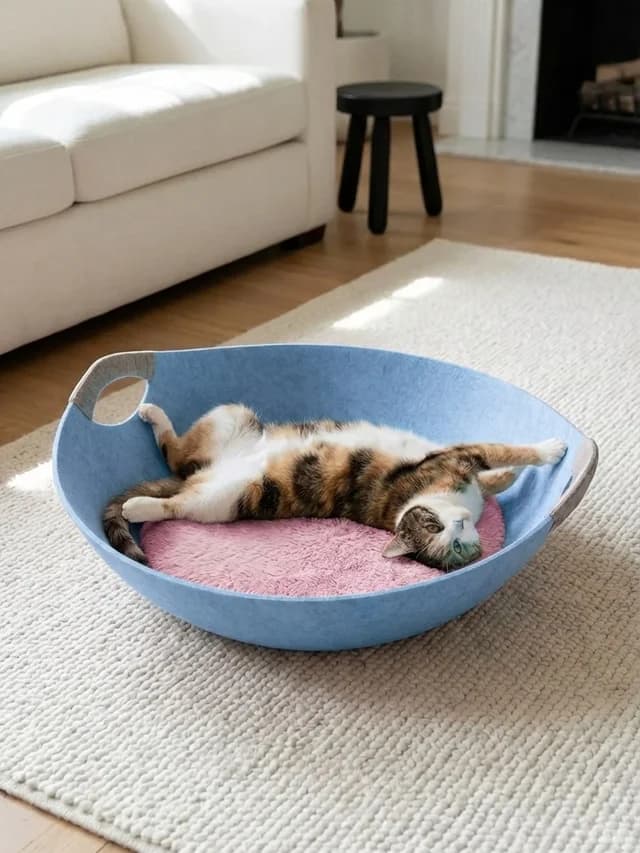
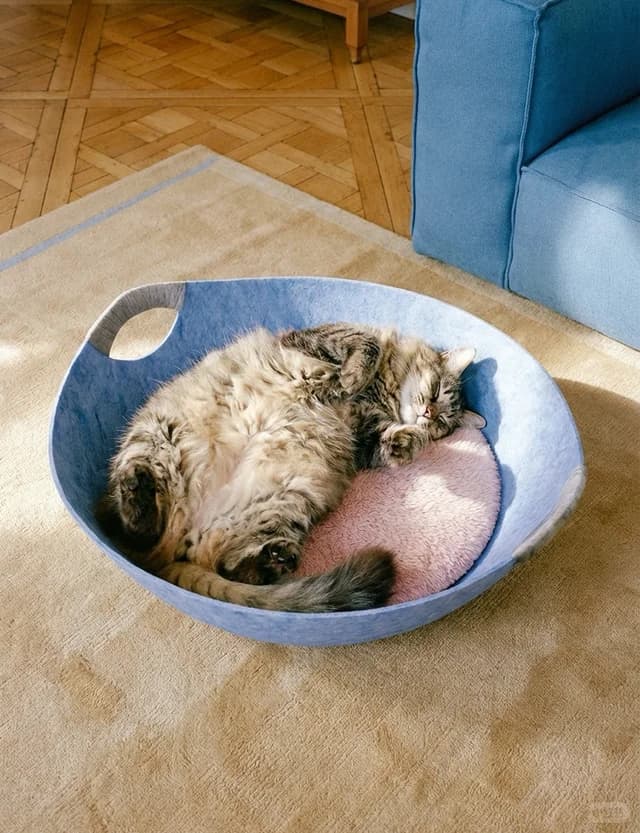
Bowl-shaped beds have a natural advantage here. Because the cat's body weight is cradled by the curved walls rather than pressing straight down into a flat surface, the load is distributed more evenly. Our Bowl Cat Beduses thick, dense felt that conforms to the cat's body shape over time — similar to how a memory foam pillow develops a familiar indent.
2. Low-profile entry
This one is critical and often overlooked. A cat with stiff hips or sore knees will avoid a bed that requires them to step over a high wall. For senior cats, look for beds with at least one lowered entry point — ideally under 4 inches — or beds where the entire rim is low enough to step into without lifting their legs significantly.
High-sided donut beds might look cozy, but if your 14-year-old cat can't get into it comfortably, it's just taking up floor space.
3. Warmth and insulation
Warmth isn't just a preference for senior cats — it's therapeutic. Research on both human and animal arthritis shows that therapeutic heat can reduce joint pain by up to 25% by increasing blood circulation to the affected area and reducing stiffness. Older cats also have a harder time regulating body temperature, so a well-insulated bed helps them conserve energy. For a deeper look at why warmth matters, see our article on why cats seek warm spots.
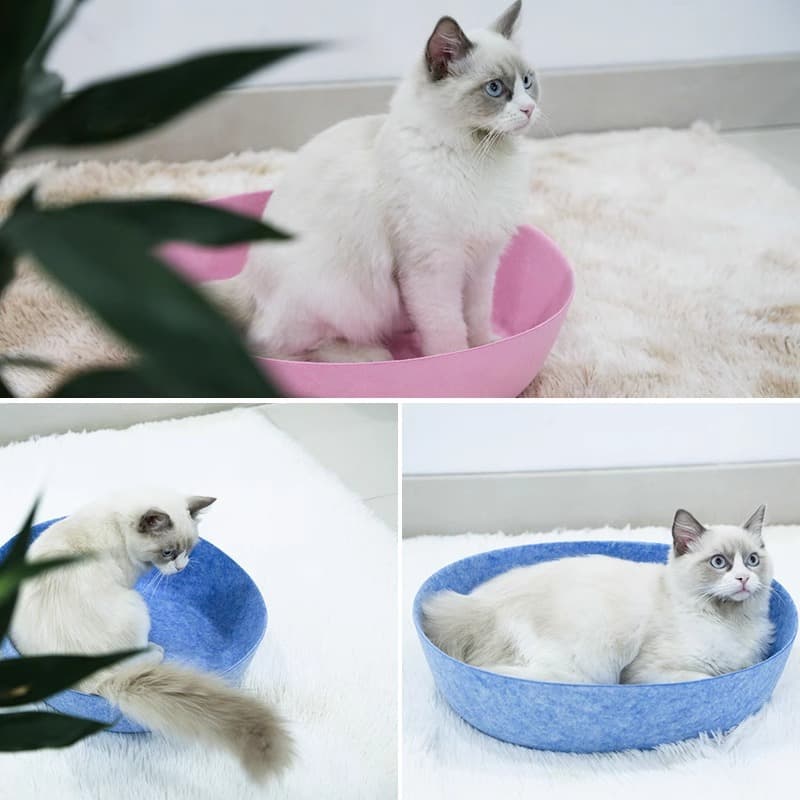
Wool felt is a standout material here. It naturally traps air within its fibers, creating an insulating layer that reflects the cat's own body heat back to them. Our Pink Felt Bowl Bed uses this exact property — the thick felt walls create a warm microclimate inside the bowl without any electronics or heating pads.
4. Multiple rest areas at different heights
The AAFP 2013 guidelines recommend providing multiple resting spots at various heights throughout the home. For senior cats, this means having at least one bed on the floor (no jumping required) and potentially a second one on a low shelf or windowsill with a ramp or step stool for access. You can read more about this multi-zone approach in our AAFP Five Pillars guide.
The reasoning is practical: a cat with arthritis might feel fine walking to a floor-level bed in the morning, but by afternoon their joints have stiffened and they'll just sleep wherever they happen to be. Having more options reduces the chance they end up napping on a cold tile floor because they couldn't reach their bed.
What about heated cat beds?
Heated beds are popular, and there's real science behind why warmth helps arthritic joints. But there are also legitimate concerns. Electric heated pads can overheat if the thermostat malfunctions, and cats with reduced mobility may not be able to move away from a too-warm surface quickly enough.
A safer middle ground: beds made from naturally insulating materials like wool felt that retain body heat passively. You get the warmth benefit without the electrical risk. If you do use a heated pad, choose one with an auto-shutoff feature and always place it inside (not under) the bed so the cat can move off it.
Signs your senior cat needs a better bed
- Sleeping on hard floors — This often means their current bed is too hard to get into, not that they prefer the floor.
- Reluctance to jump — If your cat used to sleep on the bed or couch and now stays on the floor, joint pain is likely.
- Stiffness after naps— A cat that limps or moves slowly for the first few minutes after waking up probably isn't getting adequate joint support while sleeping.
- Overgrooming joints — Cats sometimes lick sore areas obsessively. If you see bald patches on hips or elbows, talk to your vet.
Our recommendations for senior cats
Both the Bowl Cat Bed and the Pink Felt Bowl Bed work well for arthritic cats. The deep bowl shape cradles the body and distributes weight across a curved surface rather than concentrating it at pressure points. The thick felt walls provide passive warmth through insulation. And the bowl design has a naturally lowered entry point at the front where the rim dips — most cats step in easily without lifting their legs over a high wall.
If your cat is severely mobility-limited, place the bed on a non-slip mat so it doesn't slide when they step in. You can also add a folded fleece blanket inside for extra cushioning on particularly cold days.
The bottom line
Arthritis in cats is extremely common, often invisible, and under-treated. While bedding alone won't replace veterinary care (talk to your vet about pain management options like meloxicam or solensia), the right bed can meaningfully reduce daily discomfort. Focus on pressure distribution, low entry, warmth, and multiple locations — and skip the marketing hype about miracle fabrics.
Sources & Further Reading
- Ellis, S.L.H., Rodan, I., Carney, H.C., et al. (2013). AAFP and ISFM Feline Environmental Needs Guidelines. Journal of Feline Medicine and Surgery, 15(3), 219–230.
- Hardie, E.M., Roe, S.C., & Martin, F.R. (2002). Radiographic evidence of degenerative joint disease in geriatric cats. Journal of the American Veterinary Medical Association, 220(5), 628–632.
- Lascelles, B.D.X., et al. (2010). Evaluation of a pressure walkway system for measurement of vertical limb forces in clinically normal dogs and cats. American Journal of Veterinary Research, 71(9), 1042–1048.
- Dehghan, M., & Farahbod, F. (2014). The efficacy of thermotherapy and cryotherapy on pain relief in patients with acute low back pain. Journal of Clinical and Diagnostic Research, 8(9), LC01–LC04.
Products Mentioned
Best SellerOnly 0 leftBowl Cat Bed
Premium woven felt bowl bed — your cat's favorite nap spot
Low stock: 0 left
 Spring EditionOnly 0 left
Pink Felt Bowl Bed
Spring edition blush pink bowl bed in premium felt
Low stock: 0 left
 Only 0 left
Hexagon Cat Nest
Geometric hexagonal bed with built-in scratch surfaces
Low stock: 0 left