Why Do Cats Purr? The Fascinating Science of the 25 Hz Frequency
A 2001 study in the Journal of the Acoustical Society of America found cats purr at frequencies that promote bone density and soft-tissue healing. It may be evolution's reason cats nap so much.
Almost everyone knows cats purr when they're happy. Fewer people know they also purr when they're stressed, injured, or even giving birth. And even fewer know that the frequency of a cat's purr falls within the exact range bioacoustics researchers associate with tissue regeneration and bone healing.
This isn't internet folklore. It comes from a specific piece of research with a memorable title: "The felid purr: A healing mechanism?" — presented by Elizabeth von Muggenthaler of the Fauna Communications Research Institute, published in the Journal of the Acoustical Society of America (2001, Vol. 110, Issue 5).
What the research measured
Von Muggenthaler recorded and analyzed the purrs of 44 different felids, including domestic cats, cheetahs, ocelots, pumas, and servals. The recordings were run through acoustic analysis to find the dominant frequencies each species produced.
Key findings:
- Every felid in the study generated strong frequencies between 25 and 150 Hz.
- Domestic cats, ocelots, pumas, and servals produced dominant frequencies at 25 Hz and 50 Hz specifically.
- These two frequencies happen to be the exact ranges that biomedical research had already shown promote bone density and fracture healing.
The 25 Hz and 50 Hz connection isn't an accident that only cat fans care about. Those frequencies are used in medical devices today — specifically low-frequency vibration therapy — for bone density, muscle regeneration, and soft-tissue wound repair.
Why would cats evolve to purr-heal?
Von Muggenthaler's hypothesis was straightforward: cats are ambush predators that spend up to 80% of their waking life motionless, conserving energy. That much inactivity should cause muscle atrophy and bone loss. A low-grade, self-generated healing mechanism — purring — would keep the body in good repair during those long resting phases without requiring the cat to actually move.
This is still a hypothesis, not proven causation. But it's supported by three circumstantial facts: (1) all cat species in the study purr at these specific frequencies, (2) cats purr when injured or recovering, not just when content, and (3) cats are famously resilient to fracture and tissue damage compared to other similar-sized mammals.
The 3 a.m. lap visitor, explained
There's a common cat owner experience: your cat sleeps somewhere else most of the day, but when you're sick or recovering from surgery, they quietly come sit on you and purr. A lot of people treat this as wishful thinking, but within the healing-frequency hypothesis it's at least biologically plausible. Cats respond to other cats' stress signals, and purring close to a stressed human transmits low-frequency vibrations through the body in contact.
There's also some preliminary human-health research on the "purr effect," but it's far weaker than the cat biology research. Treat the health-benefits-for-humans claim as interesting but unproven.
What this has to do with cat beds
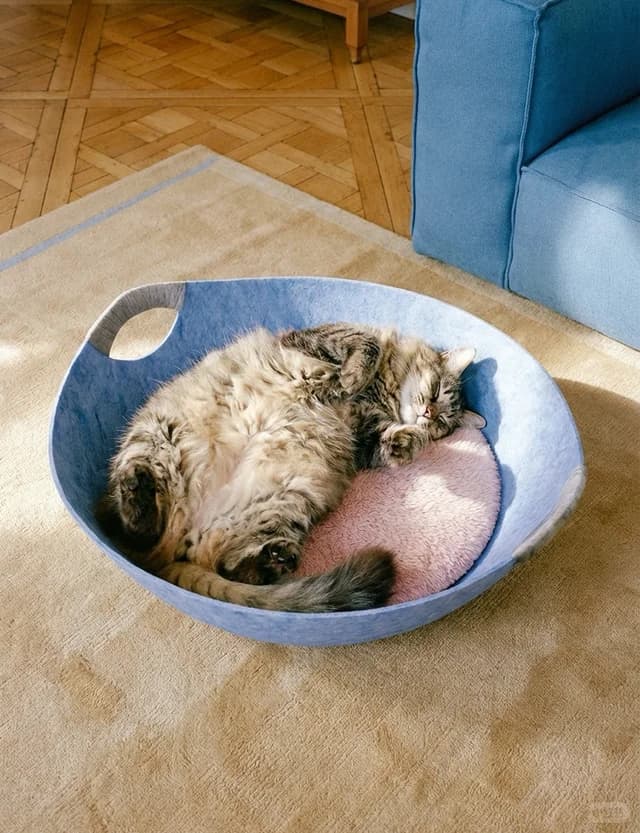
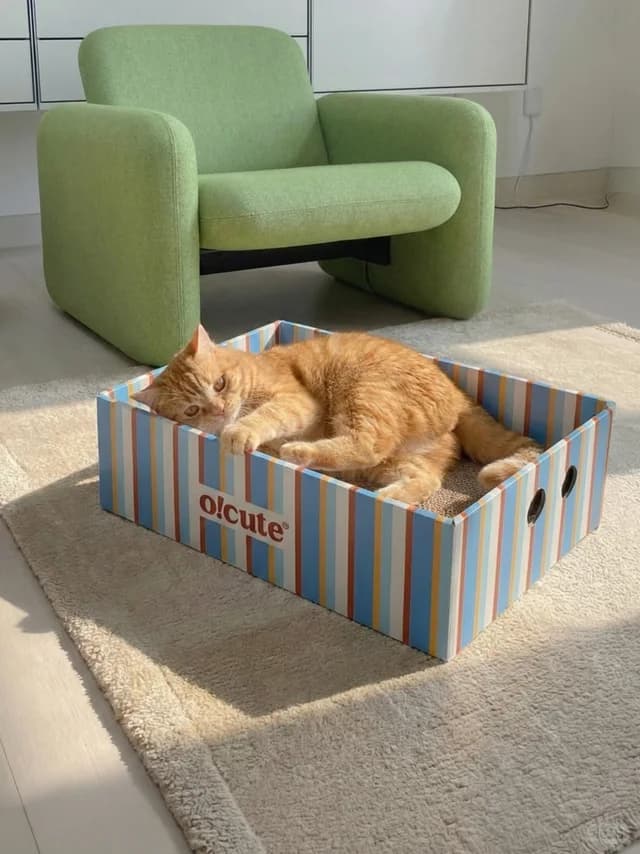
Here's the practical bit. If purring is a built-in healing mechanism, and cats purr more when they feel safe and warm, then the bed you choose is indirectly part of your cat's self-care routine. Cats purr more in enclosed, warm, quiet spots than in exposed, noisy ones. A bed that makes your cat feel secure gets more purring per day, which (under the healing hypothesis) might literally keep them in better physical condition.
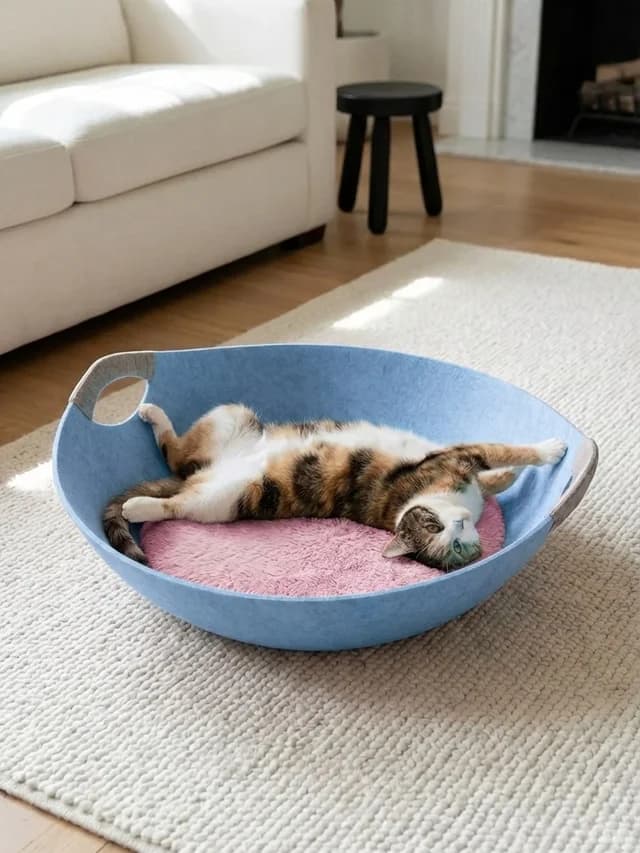
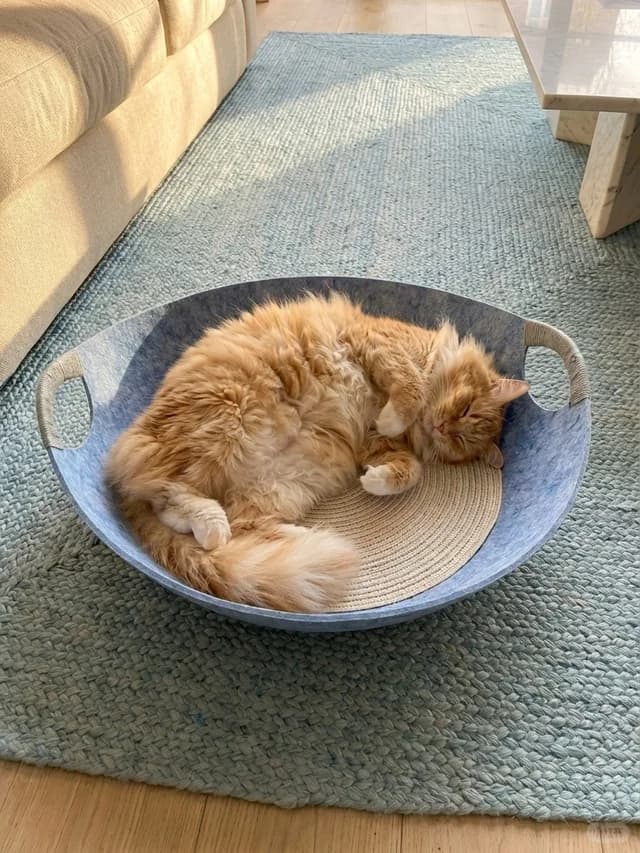
This is part of why we design beds like the Bowl Cat Bedwith deep walls and felt insulation. They're not just cozy — they create the exact environment where cats settle in, relax their shoulders, and start the slow, deep purring that matters most.
Quick facts to remember
- Cats purr at 25–150 Hz, with key peaks at 25 Hz and 50 Hz.
- These frequencies overlap with medical bone-healing vibration ranges.
- Cats purr both when content and when stressed, injured, or recovering.
- The healing hypothesis is well-cited but not definitively proven.
- Warm, enclosed beds encourage more and deeper purring.
Sources & Further Reading
Products Mentioned
Best SellerOnly 0 leftBowl Cat Bed
Premium woven felt bowl bed — your cat's favorite nap spot
Low stock: 0 left
 Spring EditionOnly 0 left
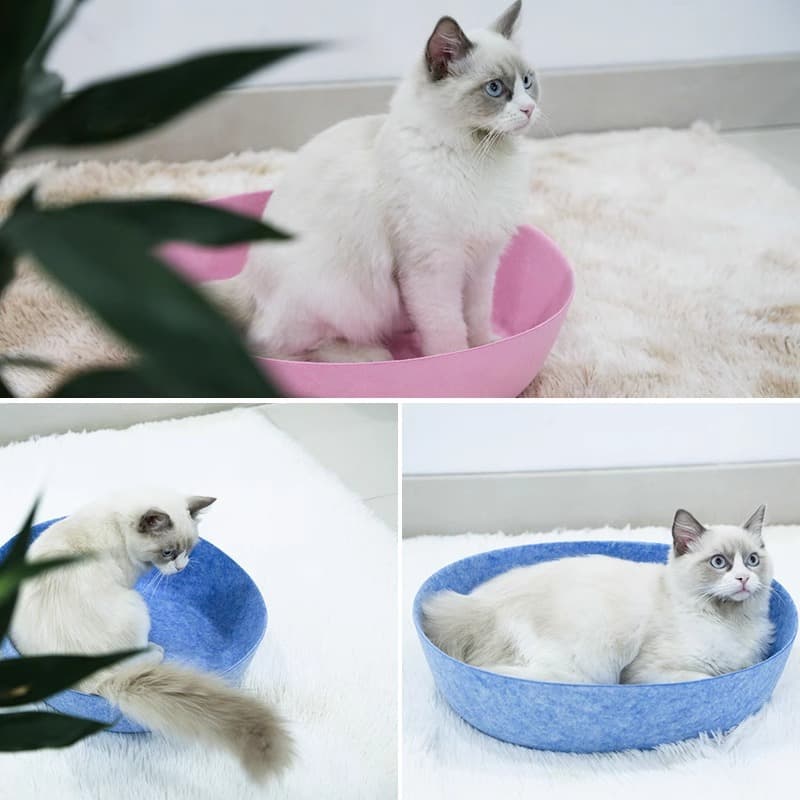
Pink Felt Bowl Bed
Spring edition blush pink bowl bed in premium felt
Low stock: 0 left
 Only 0 left
Hexagon Cat Nest
Geometric hexagonal bed with built-in scratch surfaces
Low stock: 0 left