Cat Furniture for Multi-Cat Households: How to Keep Peace and Prevent Fights
Two cats, one scratcher? That's a recipe for resource guarding. Here's the evidence-based layout strategy that stops fights before they start.
If you live with more than one cat, you already know: the politics are real. One cat claims the sunny spot on the couch. Another guards the hallway to the food bowl. A third pretends the other two don't exist — until someone sits in "their" chair.
Multi-cat households are wonderful, but they require more thoughtful furniture placement than most people realize. The good news is that the solutions aren't complicated — they're mostly about quantity, spacing, and understanding how cats think about territory.
The n+1 rule: why you need more than you think
The ASPCA recommends a simple formula for multi-cat resource planning: for n cats, provide n+1 of each key resource. Two cats? Three litter boxes, three feeding stations, three resting spots. Three cats? Four of everything.
This sounds like overkill until you understand why. Cats aren't pack animals. Unlike dogs, they don't naturally share resources with members of their social group. In feral colonies, cats maintain time-share arrangements — one cat uses the sunny rock in the morning, another in the afternoon. In your home, with fewer resources and less space, that sharing breaks down if there aren't enough options.
The result is resource guarding: one cat monopolizes the best bed, the prime windowsill, or the food bowl, and the others learn to avoid those areas. It looks like peace, but it's actually low-grade chronic stress for the subordinate cats.
Spread resources out — don't cluster them
The AAFP 2013 guidelines (Pillar 2) specifically emphasize that key environmental resources should be "multiple and separated." This is the part most multi-cat owners get wrong. Having three cat beds in the same room doesn't actually solve the problem — the dominant cat can guard all three from a single vantage point.
Instead, distribute resources across different rooms or at least different areas of the same room. One bed in the living room, one in the bedroom, one in the office. One scratcher near the entrance (territorial marking zone), one near a resting area (post-nap stretching zone), one in a hallway (transit zone).
The Ohio State University Indoor Pet Initiative has an excellent visual guide for mapping resource placement across your home. Their key principle: every cat should be able to access food, water, litter, a resting spot, and a scratching surface without having to pass through another cat's claimed territory.
Vertical space: the secret to multi-cat peace
Cats think in three dimensions. A room with a floor-level bed, a shelf-height perch, and a tall cat tree effectively has three times the territory of the same room with only floor-level furniture. Each cat can claim a different elevation and feel like they have their own space, even in a small apartment.
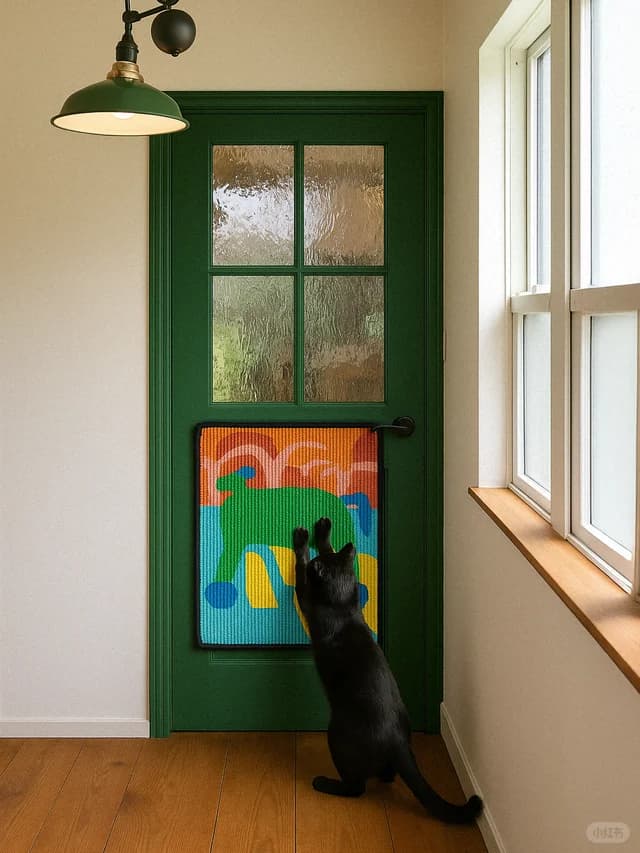
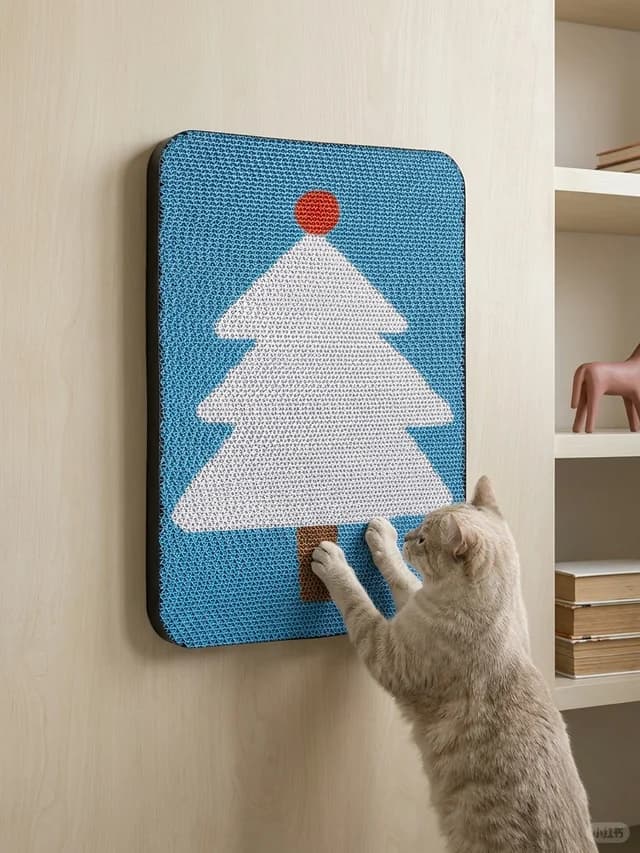
This is why wall-mounted scratchers and shelves are so valuable in multi-cat homes. Our Tree Wall Scratcher serves double duty here: it gives cats a vertical scratching surface (which many cats prefer over horizontal) and creates a high-value vertical territory marker. Mounted at different heights in different rooms, multiple wall scratchers effectively expand your home's usable territory for your cats.
Scratchers: one per cat, minimum
Scratching is a territorial behavior. When a cat scratches, they leave both visual marks and scent from their paw pads. In a multi-cat home, scratching surfaces are especially important because they let each cat mark their own space without conflict.
The problem arises when two cats want to scratch at the same time, or when one cat has to pass through another cat's territory to reach the only scratcher. The solution: have at least one per cat, placed in their preferred areas.
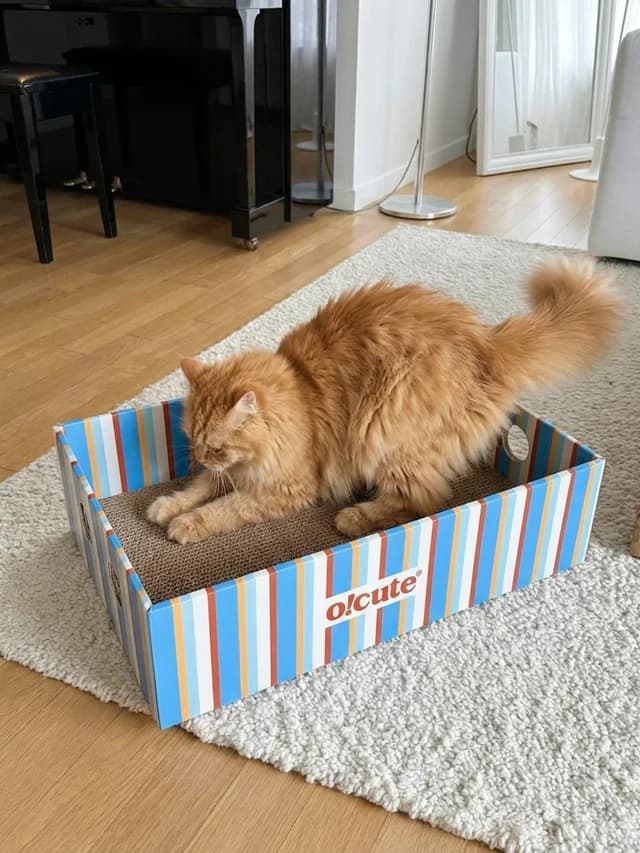
Our Striped Scratch Box is a good option for multi-cat households because it's compact enough to place in multiple locations without dominating a room. It also doubles as a lounger — cats love to sit on scratchers after they've finished scratching, which means it serves as both a marking station and a resting spot.
Beds: think about sight lines
When placing cat beds in a multi-cat home, think about sight lines. Two beds that face each other across a room create a confrontation setup — both cats can see each other, and one may feel like they need to guard "their" bed from the other. Better arrangements:
- Back-to-back or angled — Beds in the same room but facing different walls let both cats relax without staring at each other.
- Different rooms entirely — The simplest solution. Each cat gets their own space.
- Different heights — One bed on the floor, one on a shelf. The cat on the higher perch feels dominant without needing to physically guard the lower bed.
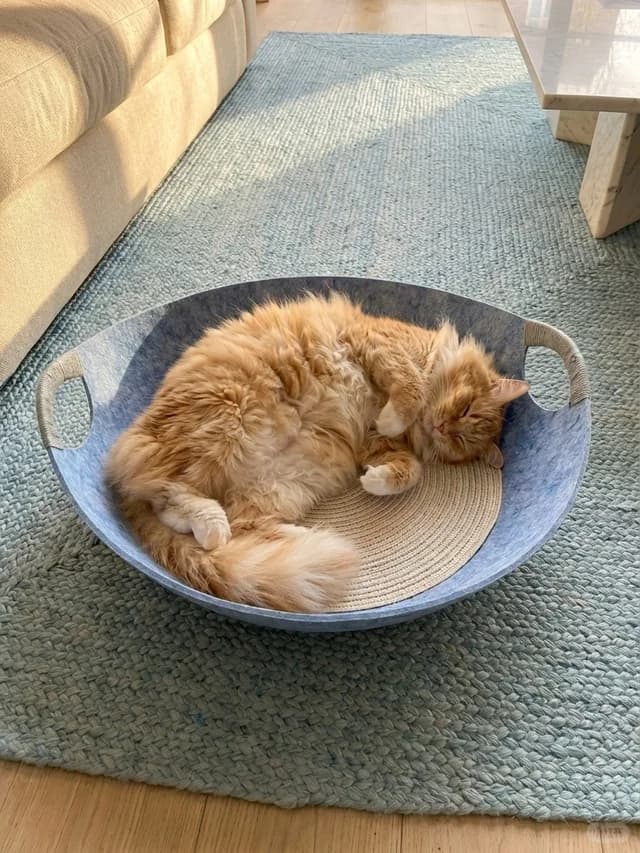
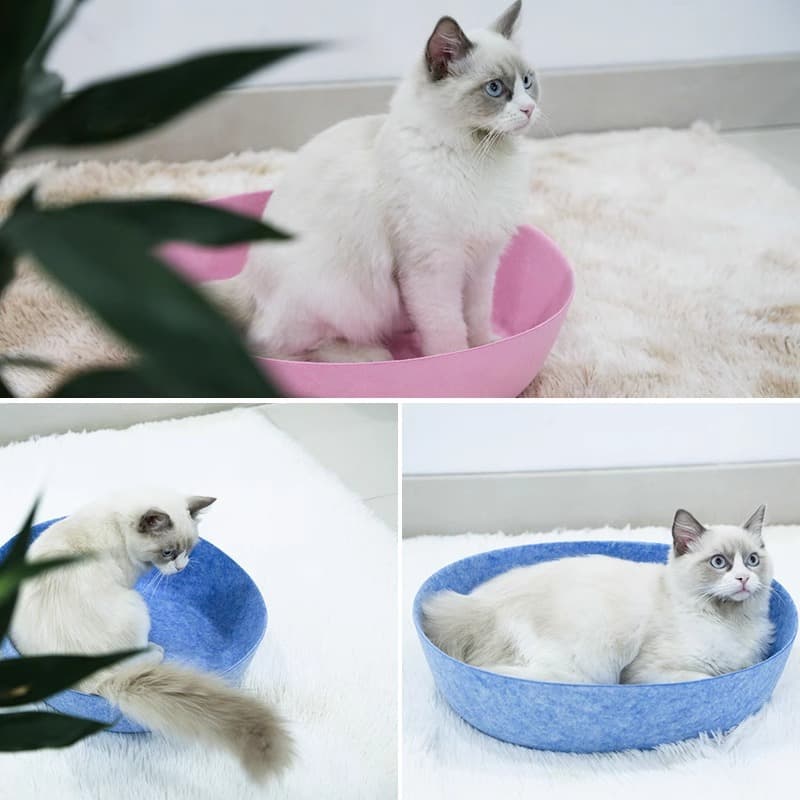
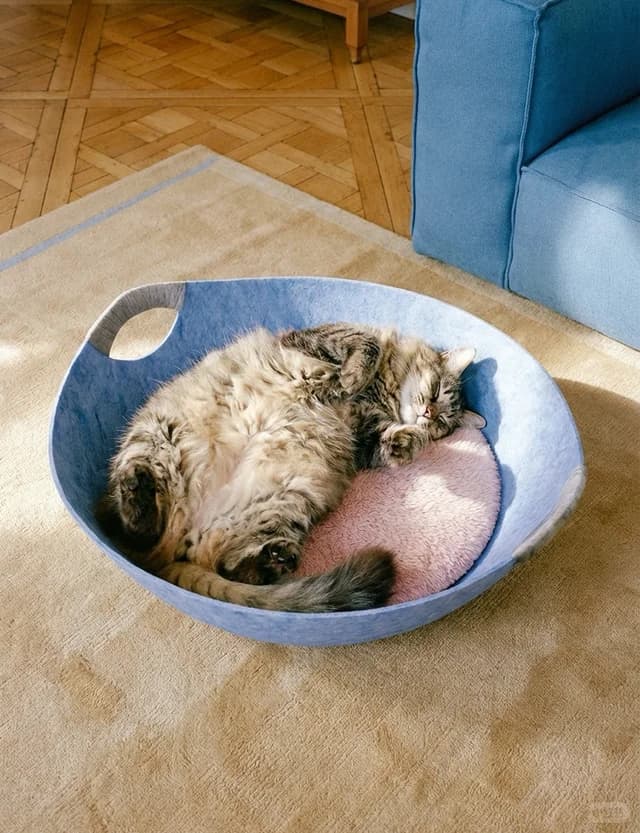
The Bowl Cat Bedworks well here because it's compact, neutral in color, and easy to place in different spots around the house. Having two or three of them in different rooms is a simple way to ensure every cat has access to a quality resting spot without resource competition.
Signs of resource conflict to watch for
- One cat always eats first while the other waits at a distance.
- Staring and blocking— One cat sits in a doorway or hallway, and the other won't pass them.
- "Surprise" attacks — One cat ambushes another near a shared resource.
- Litter box avoidance— A cat stops using a box that requires passing through another cat's claimed zone.
- Hiding — One cat spends most of the day in a single room while the other has free range of the house.
If you see these patterns, adding resources and spreading them out is the first fix to try before anything else. It's low-cost, non-invasive, and effective in the majority of cases.
A practical multi-cat furniture plan
For a two-cat household in a typical two-bedroom apartment, here's a reasonable starting setup:
- Three resting spots: Bowl Cat Bed in the living room, a second bed in the bedroom, and a shelf-height perch or window seat in the office.
- Three scratching surfaces: Striped Scratch Box near the front door, Tree Wall Scratcher in the hallway, and a third option (even a simple cardboard scratcher) near the bedroom bed.
- Three litter boxes in three separate locations — not lined up in the laundry room.
The bottom line
Multi-cat harmony isn't about buying one premium product — it's about providing enough resources, spread far enough apart, that every cat can access what they need without conflict. Think n+1. Think separate rooms. Think vertical space. The furniture doesn't need to be expensive; it just needs to be plentiful and well-placed.
Sources & Further Reading
- ASPCA. Aggression Between Cats in Your Household.
- Ellis, S.L.H., Rodan, I., Carney, H.C., et al. (2013). AAFP and ISFM Feline Environmental Needs Guidelines. Journal of Feline Medicine and Surgery, 15(3), 219–230.
- Ohio State University Indoor Pet Initiative — Resources for Cat Owners.
- Crowell-Davis, S.L., Curtis, T.M., & Knowles, R.J. (2004). Social organization in the cat: A modern understanding. Journal of Feline Medicine and Surgery, 6(1), 19–28.
Products Mentioned
 PopularOnly 0 left
Striped Scratch Box
Colorful striped box with corrugated scratch pad inside
Low stock: 0 left
 NewOnly 0 left
Tree Wall Scratcher
Christmas tree-shaped knitted wall scratcher — functional wall art
Low stock: 0 left
 Best SellerOnly 0 left
Bowl Cat Bed
Premium woven felt bowl bed — your cat's favorite nap spot
Low stock: 0 left