Sisal vs. Carpet Scratchers: A Detailed Material Comparison (With Research)
In a 2022 survey of over 1,200 cat owners, sisal fabric was the most-preferred scratcher material — beating both carpet and cardboard. But the reason why matters more than the ranking.
In a 2022 survey of 1,211 cat owners conducted by Cisneros et al. and published in Animals, sisal fabric was the most preferred scratcher material — chosen over carpet, cardboard, and sisal rope by the highest proportion of cat owners who reported their cat "always uses" the scratcher. But the raw ranking doesn't tell the full story. The reason cats prefer certain materials — and why carpet is often the wrong choice — gets into the actual mechanics of how cats scratch and what they're trying to accomplish.
What Cats Are Actually Doing When They Scratch
Scratching serves three distinct functions in cat behavior:
- Claw maintenance — Cats scratch to shed the outer dead layers of their claws, exposing the sharper layer underneath. This requires a material with enough resistance to catch and strip the outer sheath.
- Scent marking— The interdigital glands between a cat's toes deposit pheromones on the scratching surface. This is territorial communication — visible and chemical.
- Stretching — A full scratching motion requires the cat to reach upward or outward to full extension, engaging the muscles of the back, shoulders, and forelegs. This is also why vertical scratchers are used differently than horizontal ones.
With these functions in mind, the material comparison makes a lot more sense.
Sisal Fabric
Sisal fabric is woven sisal fiber — a natural agave plant fiber — with a tight, flat weave. It offers:
- Ideal resistance level— Sisal is firm enough to catch claw sheaths and strip them cleanly, but not so hard that it damages claws or discourages use. It's the Goldilocks material for claw maintenance.
- Vertical fiber orientation — Woven sisal has a grain that runs vertically, aligning perfectly with a downward scratching motion. This is why flat sisal mats work well on walls — the grain direction matches the scratching direction.
- Durability— Well-woven sisal fabric maintains its structure through thousands of scratching sessions. Unlike carpet, it doesn't pill or develop loops that can catch claws.
- No snag risk— Carpet loops can catch a cat's claw tip in a way that causes momentary panic or, rarely, injury. Sisal's tight weave eliminates this.
Our Sisal Wall Mat uses natural sisal fabric woven at a density that provides the right resistance level for adult cats. The Tree Wall Scratcher also uses sisal wrapping on the vertical post for the same reasons.
Sisal Rope vs. Sisal Fabric
These are not the same material, despite both being sold as "sisal." Sisal rope is twisted or braided fiber in a round cross-section. The distinction matters:
- Rope has lower surface area contact — A cat scratching sisal rope touches only the raised peaks of the rope coils. Sisal fabric provides a flat, consistent contact surface across the full paw width.
- Rope can unravel — After heavy use, rope coils loosen and separate, creating gaps and unstable sections. Woven sisal fabric retains its structure much longer.
- Rope is better for wrapping round posts — If a scratcher has a round post, rope wraps more cleanly than flat fabric. For flat surfaces (mats, panels), fabric is superior.
Carpet Scratchers
Carpet is the most common material in budget cat trees and combination scratchers. It's also one of the worst choices from a behavioral standpoint:
- Loops catch claws — Looped carpet pile can snag claw tips during the scratching motion, which is startling and uncomfortable. Some cats develop aversions to carpet scratchers after a bad snag experience.
- Training confusion — Carpet scratchers teach cats that carpet is an acceptable scratching surface. This transfers directly to your rugs and carpet. If you have carpet floors, this is a significant problem.
- Poor claw-maintenance function — Carpet fibers are too soft and pliant to effectively strip claw sheaths. Cats often scratch longer on carpet without the same maintenance result.
- Durability issues— Carpet pile compresses and mats with use, reducing effectiveness and accumulating shed claw sheaths in a way that's harder to clean than sisal.
Cardboard Scratchers
Cardboard occupies a different niche. The corrugated honeycomb structure provides a satisfying shredding sensation — the claw goes through the surface rather than across it. Many cats love cardboard, and several studies confirm it's highly preferred for horizontal scratching specifically.
- Best for horizontal scratching — Cats that scratch the floor, low furniture legs, or mats tend to prefer cardboard. It matches horizontal scratching instincts better than sisal.
- Not ideal for vertical scratching— The shredding motion that works on horizontal cardboard is awkward on vertical surfaces. Most cats don't scratch vertical cardboard as effectively.
- Shorter lifespan — A heavily used cardboard scratcher is done within 2–4 months. Our Striped Scratch Box uses dense corrugated cardboard that lasts longer than standard options and can be flipped to extend use.
The Material Matrix: Quick Reference
- Vertical scratcher, best claw maintenance: Sisal fabric
- Vertical scratcher, post wrapping: Sisal rope
- Horizontal scratcher, most cats love it: Cardboard
- Avoid for any scratcher: Carpet (training confusion, snag risk, poor claw maintenance)
Common Mistakes
- Assuming one material is enough. Most cats benefit from having both a vertical sisal scratcher and a horizontal cardboard option. They serve different behavioral needs.
- Replacing a scratcher before it's worn. Cats prefer already-scratched surfaces because their scent is deposited there. A slightly shredded scratcher is more appealing than a new one to most cats.
- Choosing carpet to match your décor.I understand the impulse, but the behavioral and training costs aren't worth it — especially if you have carpet flooring.
Sources & Further Reading
- Cisneros, M.G., et al. (2022). Scratching Post Use in Domestic Cats: A Survey of Owner Perceptions. Animals, 12(9), 1182.
- Zhang, L. & McGlone, J.J. (2020). Scratcher Preferences of Adult Domestic Cats. Applied Animal Behaviour Science, 227, 104876.
- Bradshaw, J.W.S. (2013). Cat Sense: How the New Feline Science Can Make You a Better Friend to Your Pet. Basic Books.
Products Mentioned
Only 0 leftSisal Wall Mat
Designer striped wall-mounted sisal scratching mat
Low stock: 0 left
 NewOnly 0 left
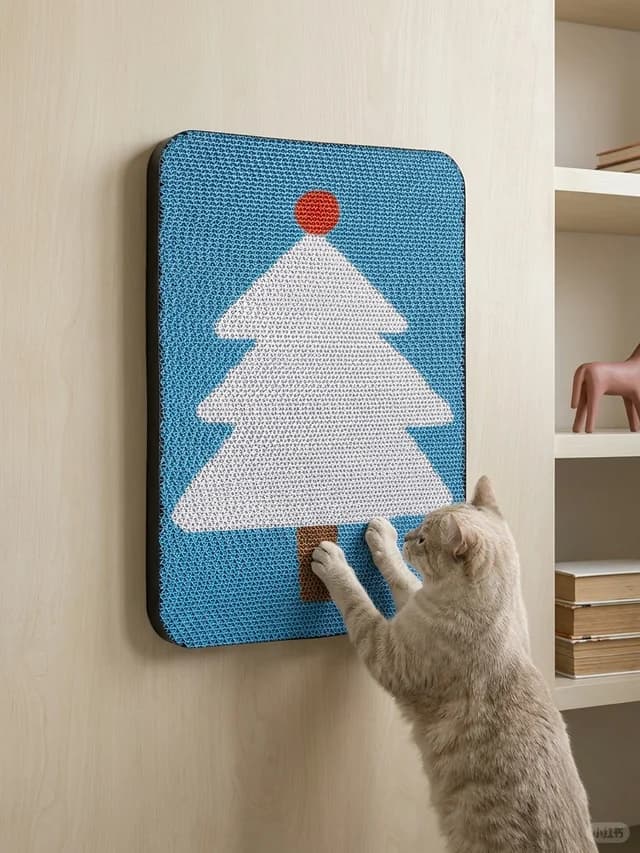
Tree Wall Scratcher
Christmas tree-shaped knitted wall scratcher — functional wall art
Low stock: 0 left
 PopularOnly 0 left
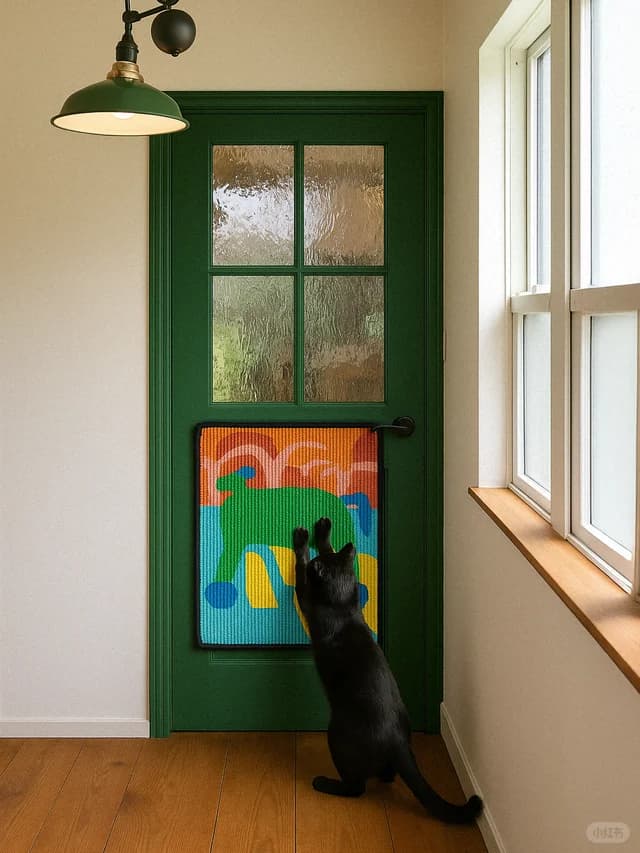
Striped Scratch Box
Colorful striped box with corrugated scratch pad inside
Low stock: 0 left