Self-Heating Cat Beds: Do They Actually Work? An Honest Guide
Self-heating cat beds sound too simple to be real. They're not powered. No plugs. They just reflect body heat back. But they genuinely work — for the right type of cat.
A self-heating cat bed with no power cord, no heating element, and no batteries sounds like marketing language for “just a bed.” It's not. The technology is real, the physics is straightforward, and for the right type of cat, it works noticeably well. Here's the honest version.
How self-heating beds actually work
Self-heating cat beds use a reflective inner lining — typically Mylar or a similar metallic polymer film — that reflects the cat's own body heat back toward them rather than allowing it to dissipate into the surrounding air or bed material. The cat's body generates the warmth; the bed retains it.
This works because cats radiate a significant amount of body heat, particularly from their underside where blood vessels run close to the skin surface. A standard polyester fill bed absorbs some of this heat but conducts it away relatively quickly. A reflective layer dramatically slows this heat loss — the same principle behind emergency thermal blankets.
The effective temperature difference is modest but real: 5–8°F warmer than the ambient room temperature in most conditions, versus an unlined bed. That's meaningful for a 12+ year old cat or a cat recovering from illness, but probably not noticeable to a healthy young adult cat in a 70°F room.
Which cats benefit most
Senior cats (8+ years): Older cats have reduced thermoregulatory capacity and prefer warmer sleeping spots. In cat welfare surveys, older cats consistently choose warmer options. A self-heating bed directly addresses this without the risk of electrical heating elements.
Thin-coated or short-haired breeds: Hairless breeds (Sphynx, Bambino), Devon Rex, and other cats with limited insulating fur benefit substantially from any additional warmth retention.
Cats in cool climates or poorly insulated homes: A room that runs 60–65°F will make a self-heating bed noticeably more attractive than a standard one.
Cats recovering from illness or surgery:Maintaining body temperature is important during recovery. Self-heating beds are vet-recommended because they're warm without the burn risk of electric pads.
Limitations to understand
Self-heating beds only work when the cat is in them. They don't pre-warm like an electric pad, which means a cat approaching a cold bed gets no inducement from warmth — they need to commit to lying down before the benefit kicks in. Some cats, particularly those who're particular about starting temperature, prefer the immediate warmth of an electric option.
They also work less well in ambient temperatures above 75°F — in summer or in warm homes, the reflective layer makes little practical difference because the ambient air is already close to the cat's preferred temperature.
What to look for in a self-heating bed
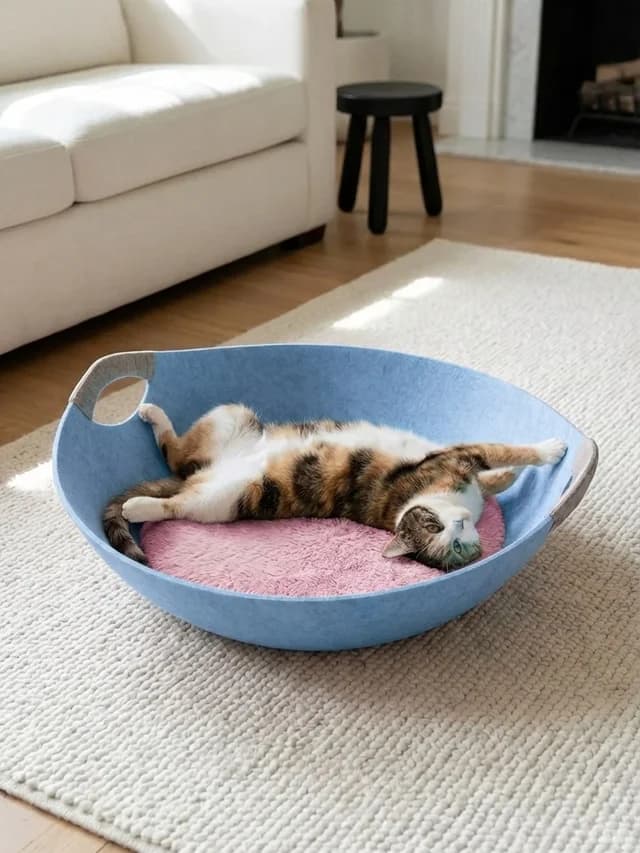
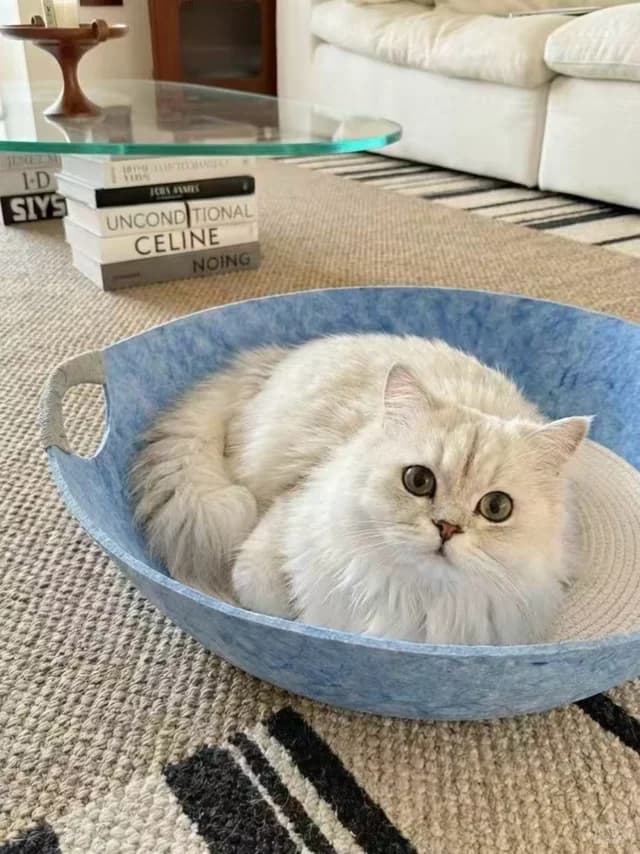
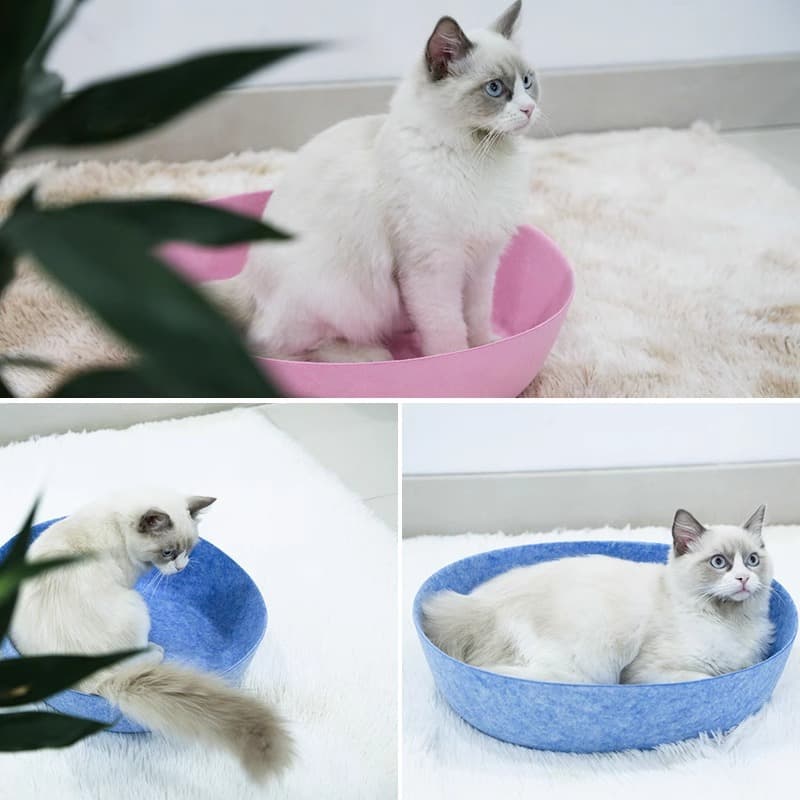
The reflective layer should be integrated into the bed rather than a separate insert — integrated layers last through washing. Confirm the cover is machine washable. Check for raised edges (most cats prefer a bolstered bed for the pressure sensation along their spine). And size up: self-heating beds are often sold in sizes marketed for smaller dogs, and many are actually too small for a typical adult cat. Our bowl cat bed design uses raised edges and a thermally efficient fill — cats that seek warm spots consistently prefer it over flat options.
Sources & Further Reading
Products Mentioned
 Best SellerOnly 0 left
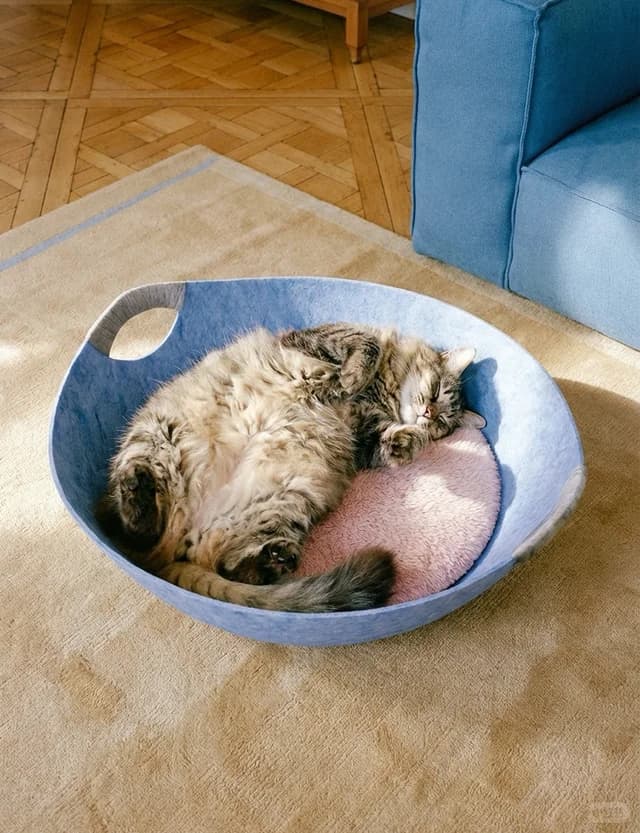
Bowl Cat Bed
Premium woven felt bowl bed — your cat's favorite nap spot
Low stock: 0 left
Spring EditionOnly 0 leftPink Felt Bowl Bed
Spring edition blush pink bowl bed in premium felt
Low stock: 0 left
 Only 0 left
Hexagon Cat Nest
Geometric hexagonal bed with built-in scratch surfaces
Low stock: 0 left