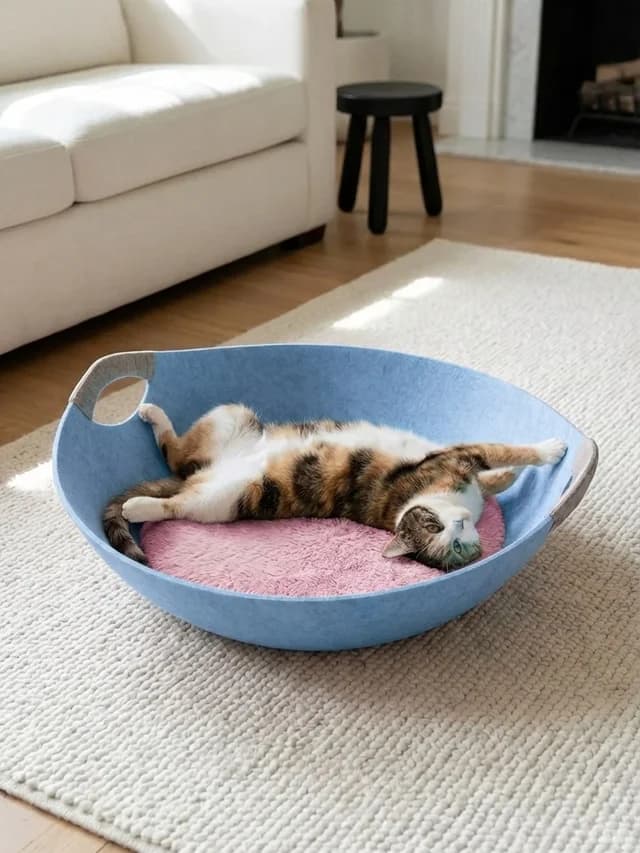
Donut Cat Beds: Why Cats Go Crazy for the Bolster Shape (And the Best Ones in 2026)
A donut bed isn't just cute — it satisfies three feline instincts simultaneously: the urge to burrow, the need to press against something solid, and the preference for deep cushioning. Here's why it works.
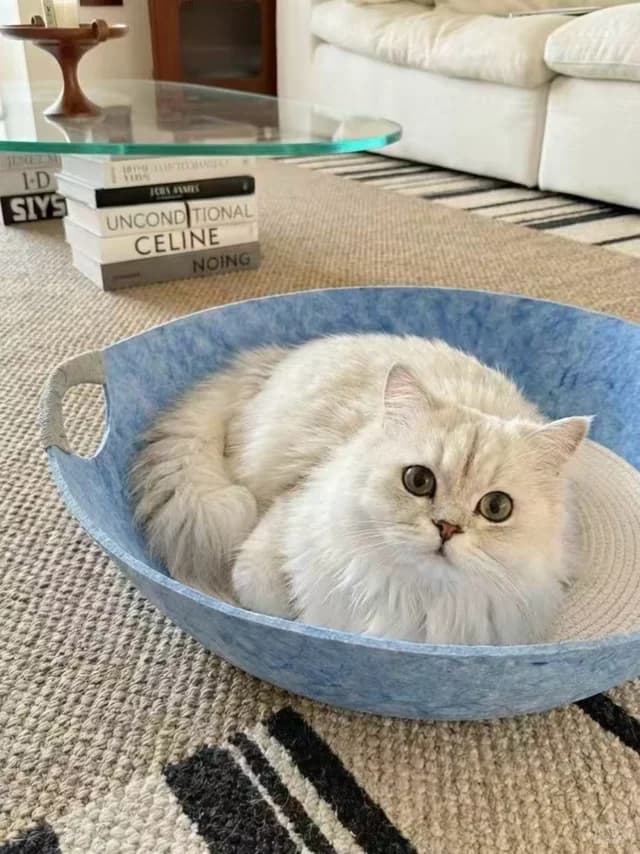
The donut cat bed — a round or oval bed with a raised bolster rim — is consistently the best-selling cat bed category on every major pet retail platform. That's not a coincidence, and it's not just because they photograph well.
Cats have three strong instincts that the donut shape satisfies better than any flat bed: the drive to burrow into something soft and enclosed, the preference for pressing their body against a solid surface on at least two sides, and the need for deep, compressible cushioning that doesn't compress flat under their weight.
Why the bolster rim matters
The raised rim is the key feature. A 2016 study on domestic cat resting preferences found that cats in stressful environments significantly preferred enclosed or semi-enclosed resting surfaces over open flat ones. The bolster rim provides three functions: it gives the cat something to press its body against (a behavior called "thigmotaxis" — the drive to make body contact with surfaces), it creates a visual boundary that signals "this is a protected space," and it raises the cat's head and neck into a comfortable neutral position.
Cats that routinely curl into tight circles — tucking their nose under their tail — are thermoregulating and self-soothing simultaneously. A donut bed supports this posture perfectly; a flat cushion doesn't.
Material comparison for donut beds
The material determines warmth, washability, and how long the bed keeps its shape:
- Wool felt — Naturally thermoregulating, holds shape indefinitely, resists odor well. Usually handmade and more expensive ($40-80). Not machine-washable — spot clean only.
- Plush fleece / sherpa — Soft, machine-washable, and typically the most affordable ($20-40). The inside compresses over time — look for models with PP fiber filling that bounces back.
- Faux fur — Popular for aesthetics. Durable but can mat with repeated washing. Check the inner filling is substantial enough to maintain the bolster shape.
- Memory foam base with fabric cover — Best for senior cats with arthritis. The memory foam prevents sinking through the bed; the cover is removable for washing.
What size to buy
Most cats curl into a circle roughly 13-16 inches in diameter when sleeping. The inside diameter of the donut should match this. Too large and the bolster rim doesn't touch the cat's back when curled; too small and the cat can't stretch out when they want to.
For most domestic cats under 12 lbs, a 20-22 inch outer diameter (with roughly a 14-16 inch inner diameter after the bolster) works well. For large breeds like Maine Coons or Ragdolls over 15 lbs, look for 24-26 inch outer diameter options.
Getting your cat to use it
Place the new bed in a location the cat already uses — on the sofa, next to a window, or in a spot they've already claimed on the floor. Don't move it to where you think they should sleep. Sprinkle a small amount of catnip inside and put one of your worn T-shirts inside the bowl for the first few days — the familiar scent signals safety. Most cats investigate within 48 hours and settle in within a week.
Sources & Further Reading
Products Mentioned
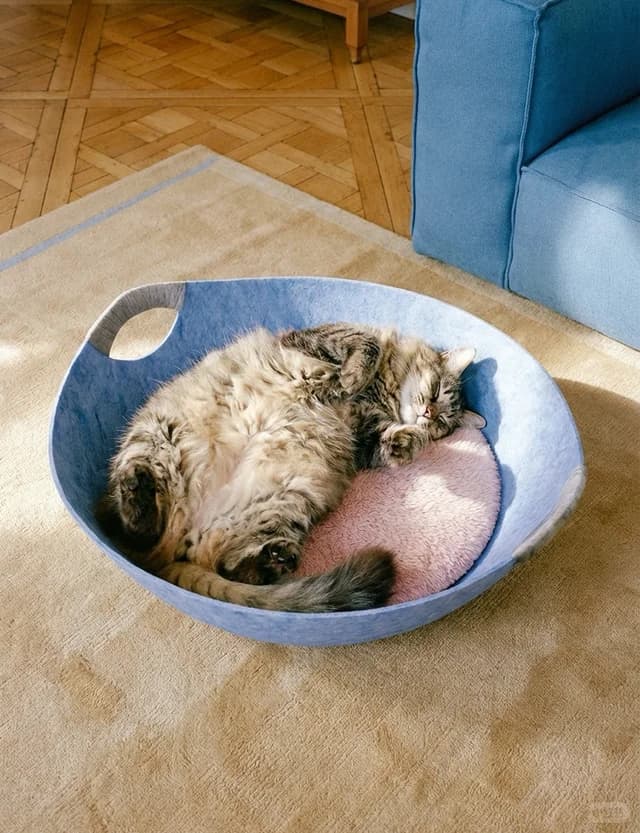 Best SellerOnly 0 left
Bowl Cat Bed
Premium woven felt bowl bed — your cat's favorite nap spot
Low stock: 0 left
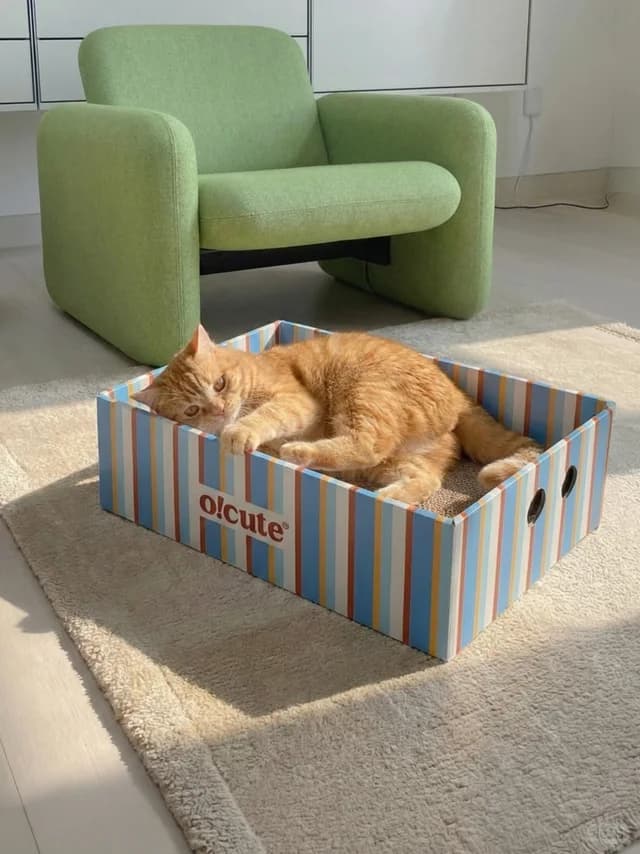 Only 0 left
Hexagon Cat Nest
Geometric hexagonal bed with built-in scratch surfaces
Low stock: 0 left
 Spring EditionOnly 0 left
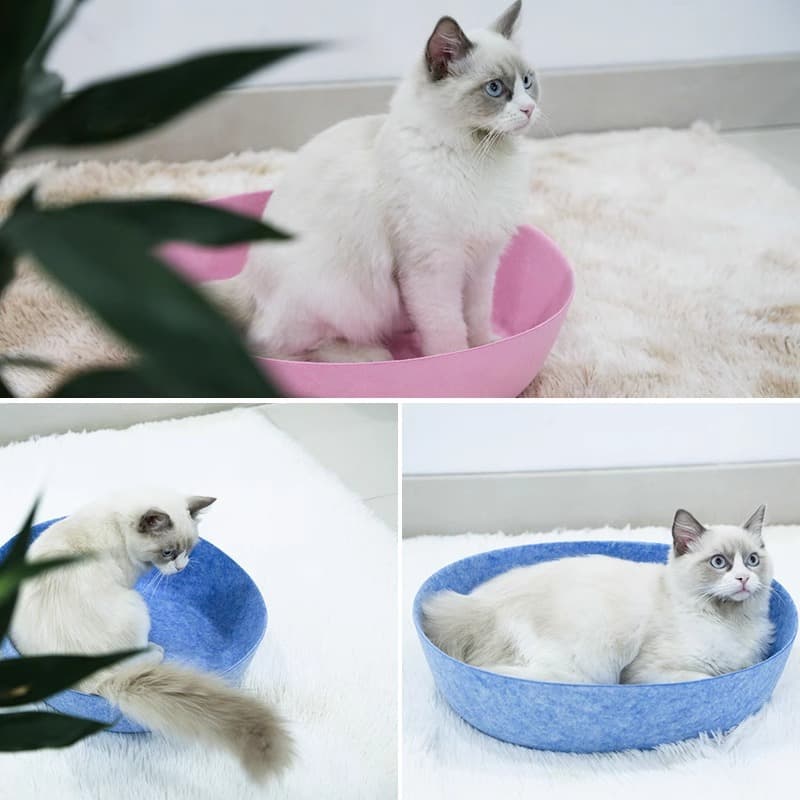
Pink Felt Bowl Bed
Spring edition blush pink bowl bed in premium felt
Low stock: 0 left