Cat Window Beds: How to Choose One That Stays Up (and That Your Cat Will Use)
A window perch satisfies two of a cat's biggest needs: warmth and a high vantage point. The problem is most cheap suction-cup beds fail under a heavy cat. Here's how to pick one that lasts.

A window perch gives an indoor cat two things it genuinely craves: warmth from direct sunlight and a high vantage point to monitor its territory. For cats that spend most of the day indoors, a window bed can meaningfully reduce boredom-related behavior — excessive vocalization, furniture scratching, and attention-seeking aggression.
Types of cat window beds
Suction cup window beds attach directly to glass using large suction cups, typically 3–4 per bed. They require no tools and leave no marks, which makes them popular in rentals. The problem: cheap suction cups lose grip over time, especially in humid rooms or on textured glass, and a falling bed with a cat on it creates a serious trust problem. Look for beds with commercial-grade cups (at least 3.5 inches diameter) and a stated weight limit of at least 30 lbs.
Window sill hammocks use tension rods or brackets that rest on the sill rather than suction to glass. These are significantly more stable and work with any window that has a sill depth of 2 inches or more. The fabric hammock suspends below the sill, creating a cozy enclosed feeling that many cats prefer to an open platform.
Mounted window shelvesattach to the wall beside the window using standard shelf brackets. These can hold any weight, are permanent, and position the cat at exactly the right height for the view. They require drilling, which isn't suitable for renters, but for homeowners they're the most reliable option.
Getting your cat to use a window bed
Most cats need 1–2 weeks to adopt a new perch. Place the bed at a window that already gets direct sun — south or east-facing windows work best. Make the surface appealing by placing a worn T-shirt (carrying your scent) on it for the first few days. Don't place the bed near a window where your cat can see outdoor cats, dogs, or heavy foot traffic; these stressors can make a window perch a source of anxiety rather than comfort.
Weight and size considerations
Most cats weigh between 8 and 16 lbs. If your cat is on the heavier end or you have multiple cats, prioritize beds with explicit weight ratings over 25 lbs and prefer sill-mounted or wall-mounted designs over suction cup models. The standard window bed platform (roughly 14 × 11 inches) is adequate for an average-sized cat to rest; for large cats or Maine Coons, look for platforms at least 16 × 13 inches.
Sources & Further Reading
Products Mentioned
Best SellerOnly 0 leftBowl Cat Bed
Premium woven felt bowl bed — your cat's favorite nap spot
Low stock: 0 left
 Only 0 left
Hexagon Cat Nest
Geometric hexagonal bed with built-in scratch surfaces
Low stock: 0 left
 Spring EditionOnly 0 left
Pink Felt Bowl Bed
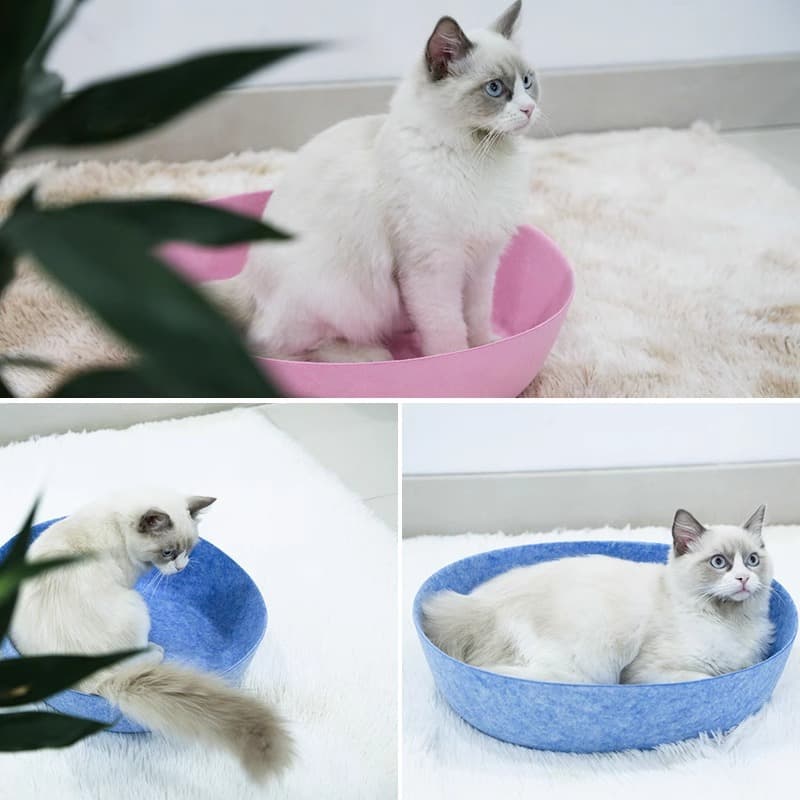
Spring edition blush pink bowl bed in premium felt
Low stock: 0 left