DIY Cat Wall Shelves vs. Buying Pre-Made: Honest Cost, Safety, and Style Comparison
DIY cat shelves look easy on YouTube. But when you add up materials, tools, and your weekend — is it actually cheaper or better than buying?
At some point, every cat owner looks at their walls and thinks: "My cat would love shelves up there." And then comes the question that divides the cat internet into two camps — should you build your own cat wall shelves, or buy pre-made ones? Having seen both approaches succeed and fail spectacularly, here's an honest breakdown of the real costs, risks, and trade-offs.
The true cost of DIY cat shelves
Let's start with money, since that's usually the main reason people consider DIY. A basic set of three cat wall shelves requires:
- Materials: Wood planks or plywood ($15-40), L-brackets or floating shelf hardware ($10-25), sisal rope or carpet scraps for covering ($10-20), screws and wall anchors ($5-10), sandpaper and wood finish ($5-15).
- Tools you might not own: A drill ($30-80 if buying), a stud finder ($15-30), a level ($5-15), possibly a circular saw if cutting your own wood ($50-150).
- Total realistic cost:$50-150 for materials alone, potentially $150-300+ if you need tools. And this doesn't account for the trip to the hardware store, which somehow always costs more than planned.
- Time: 4-8 hours for a first-timer, including measuring, cutting, sanding, wrapping, mounting, and the inevitable re-mounting when you realize one shelf is slightly crooked.
The true cost of pre-made cat wall furniture
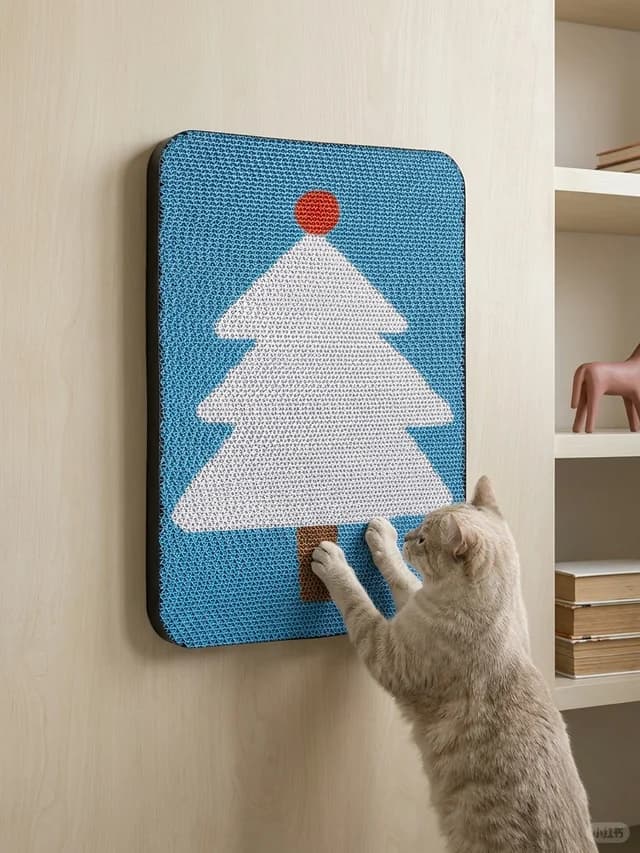
Pre-made wall-mounted cat furniture typically runs $25-80 per piece, depending on size and materials. A wall scratcher like the Tree Wall Scratcher or a Sisal Wall Mat comes with mounting hardware and takes about 15 minutes to install. No tools needed beyond a drill and possibly a screwdriver.
For a comparable three-piece setup: $75-200, installed in under an hour, with engineered weight ratings and a consistent finish.
The safety question (this is the big one)
Here's where DIY gets serious. Cats don't gently step onto shelves — they launch themselves from the floor, from other furniture, and from across the room. A 10-pound cat jumping from 4 feet away lands on a shelf with 3 to 5 times its body weight in force. That's 30-50 pounds of sudden, dynamic load on a bracket.
The critical factor is what's behind your wall:
- Mounting into studs: Wood studs can handle virtually any cat-related load. If you can find your studs and drill into them, both DIY and pre-made shelves will be secure.
- Drywall anchors: This is where DIY projects go wrong. Standard plastic drywall anchors are rated for 10-25 pounds of static load — but a jumping cat creates dynamic load that can be 3-5x the static equivalent. Many DIY cat shelf failure videos on YouTube feature the sickening crunch of drywall anchors ripping out of the wall.
- Toggle bolts: These are the minimum acceptable anchor for cat shelves in drywall without studs, rated for 50+ pounds each. But they leave large holes and are harder to install correctly.
Pre-made products from reputable manufacturers specify weight ratings and typically include appropriate mounting hardware. DIY shelves have whatever weight rating you give them — and if you're honest with yourself, you probably didn't do the math.
The aesthetics question
This is where feelings get hurt, but someone needs to say it: unless you have genuine woodworking skills, DIY cat shelves often look... DIY. Uneven edges, visible bracket hardware, carpet covering that starts peeling after a month, mismatched wood tones — these are all common outcomes of well-intentioned weekend projects.
Pre-made pieces are designed as finished products. The edges are clean, the materials are consistently finished, and the mounting hardware is hidden. A Tree Wall Scratcher on your wall looks like a deliberate design choice. A carpet-wrapped plywood plank on L-brackets looks like a carpet-wrapped plywood plank on L-brackets.
That said, if you're skilled with tools and have a clear design vision, DIY gives you the ability to match exact wood stains, custom dimensions, and specific room layouts that no mass-produced product can replicate.
When DIY makes sense
- You're building a full climbing system with 5+ pieces that need to fit a specific wall layout
- You have real woodworking tools and skills (not just enthusiasm)
- You want to match specific wood or color tones in your room
- You enjoy the building process itself — the satisfaction of your cat using something you made is real and valid
When pre-made wins
- You want 1-3 wall pieces and want them installed this weekend
- Aesthetics matter and you want a polished, finished look
- You're not confident in your wall-mounting skills (no shame — better a secure pre-made shelf than an insecure DIY one)
- You're renting and want to minimize wall damage
The Ohio State Indoor Pet Initiative emphasizes that vertical space is one of the most important environmental enrichments for indoor cats. Whether that vertical space comes from a DIY project or a pre-made product matters less than whether it exists at all. If perfectionism about building your own shelves is preventing you from providing vertical space, just buy something and install it. Your cat doesn't care who made it.
The honest verdict
For wall scratchers and pads, pre-made wins on value almost every time. The engineering, materials, and finish quality you get for $30-60 would cost more than that in raw materials alone, and you'd spend a weekend building it. For comprehensive wall climbing systems spanning an entire room, DIY can make financial sense — if you're genuinely handy. For more on choosing wall-mounted options, see our wall-mounted cat scratcher guide.
The worst option? Spending six months "planning" a DIY project while your cat has no vertical space at all.