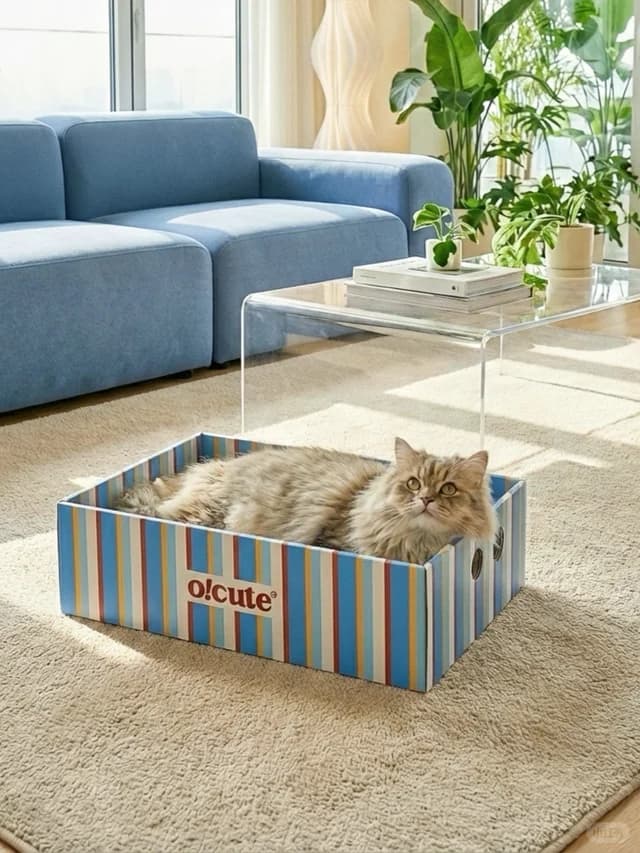
Cat Furniture That Doubles as Home Decor: A Style-First Guide for 2026
What if your cat's scratcher was the most interesting piece of wall art in your hallway? That's the new standard for pet-owner design.
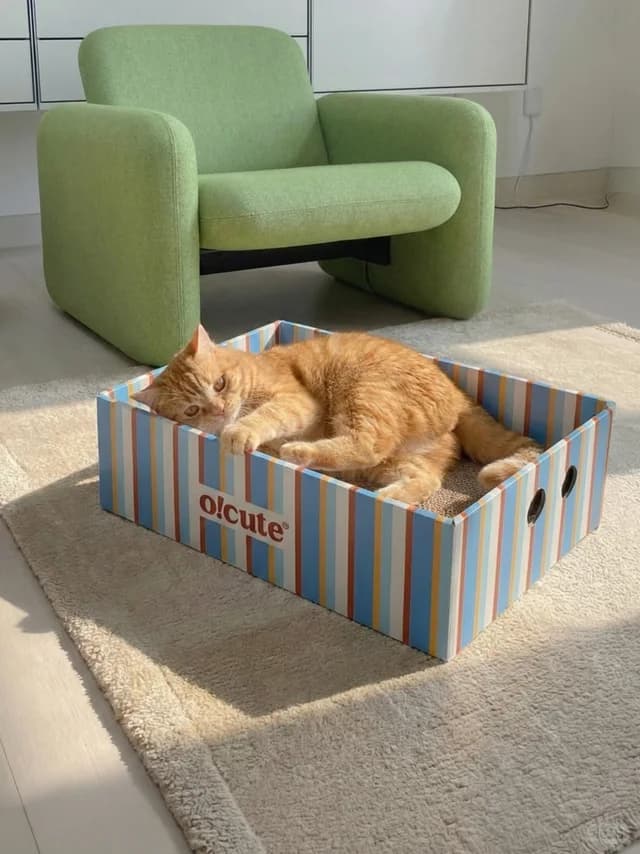
There's a moment every design-conscious cat owner dreads: you've spent months curating your living room — the right sofa, the right rug, the right balance of textures and tones — and then you bring home a beige carpet cat tree with dangling pom-poms and it undoes everything. The cat loves it. Your living room does not. But here's the thing: it doesn't have to be this way. Cat furniture that genuinely doubles as home decor isn't a marketing fantasy. It's a growing category of products designed for people who refuse to choose between a beautiful home and a happy cat.
The rise of the aesthetic pet owner
The "aesthetic pet owner" isn't a niche demographic anymore — it's a rapidly growing market segment of people willing to pay a premium for pet products that look like they belong in their home. Instagram and Pinterest have driven this shift, but the underlying desire is simple: your home is your personal space, and everything in it should reflect your taste. Pet products shouldn't get a pass just because they're functional.
This isn't vanity. The AAFP/ISFM environmental guidelines actually support placing cat resources in visible, social areas of the home rather than hiding them in back rooms. A scratching post hidden behind the laundry room door doesn't get used. A beautiful wall scratcher in your living room gets used daily — because cats want to scratch where life happens. The best design decision for your home is often the best welfare decision for your cat.
Design principles that work
If you're trying to integrate cat furniture into your decor, these principles will save you from expensive mistakes:
Match your existing palette
This sounds obvious, but most people shop for cat furniture by browsing "cat beds" and picking one they like in isolation. Instead, start with your room's existing colors. If your space runs warm — cream walls, oak furniture, amber accents — look for cat furniture in natural tones: warm wood, unbleached sisal, dusty blush felt. If you lean cool and minimal — white, gray, black — geometric shapes in muted tones will integrate seamlessly.
Choose architectural shapes over cartoon shapes
The fastest way to make cat furniture look like cat furniture (in a bad way) is cartoon-shaped design. Fish-shaped scratchers, mouse-ear beds, paw-print everything — these read as pet products immediately. Architectural shapes — hexagons, bowls, clean cylinders, tapered forms — read as design objects that happen to be for cats. The Hexagon Cat Nest is a perfect example: mounted on a wall, it looks like a geometric wall shelf. The cat inside is a bonus.
Favor natural materials
Felt, sisal, wood, and linen all have textures that complement interior design rather than competing with it. Synthetic plush, neon-colored plastic, and printed polyester fabrics scream "pet aisle at the big box store." Natural materials age well, too — a wool felt bed develops a gentle patina over time, while a polyester bed just pills.
Wall-mounted pieces: the biggest crossover
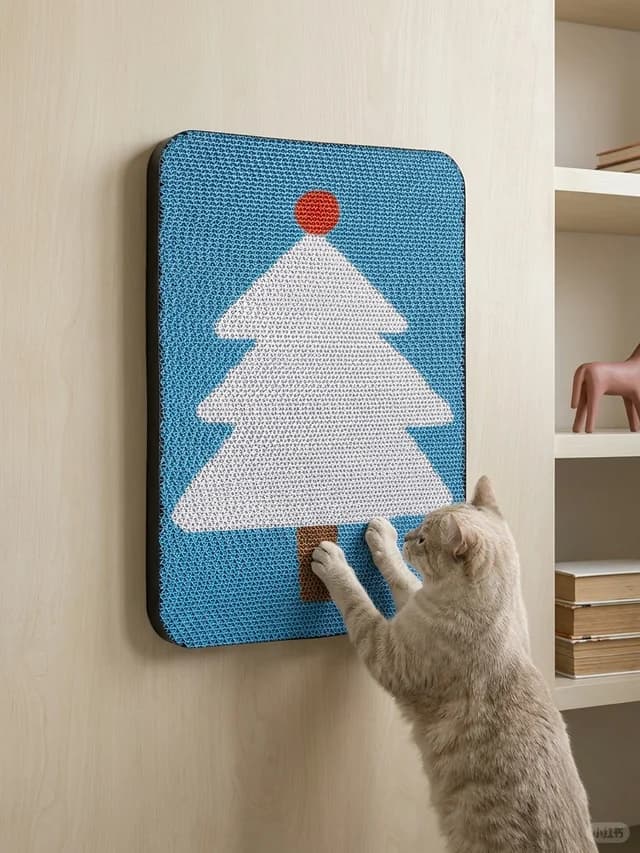
If there's one category where cat furniture and home decor genuinely merge, it's wall-mounted pieces. A Tree Wall Scratcher in natural sisal on a white wall isn't a cat scratcher that happens to be on the wall — it's wall art that happens to be scratchable. The organic, tree-like shape reads as a sculptural element. Guests notice it as decor before they realize it's functional.
Wall-mounted pieces also have the practical advantage of zero floor footprint, which matters enormously in small apartments. They create vertical territory for your cat without consuming any of your living space.
Bowl beds: where sculpture meets napping
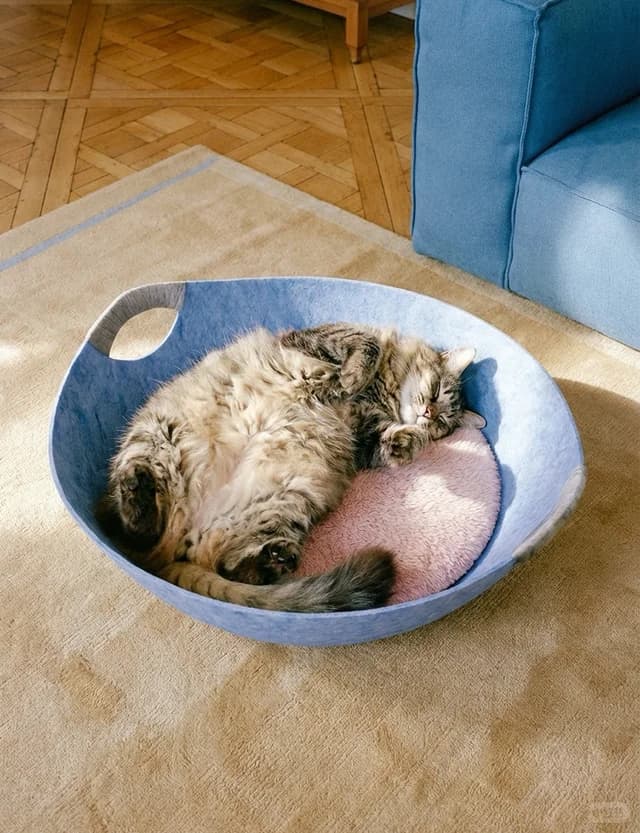
Bowl-shaped cat beds in muted tones — dusty blue, blush, warm gray, oatmeal — read as intentional decor objects. Place a Bowl Cat Bedon a side table or open shelf, and it looks like a handcrafted felt vessel. The curved form is aesthetically satisfying in the same way a ceramic bowl or a woven basket is. It's an object you wouldn't be embarrassed to have in a design magazine photo shoot — and your cat will spend 16 hours a day curled up in it.
The "one hero piece" approach
If you're just starting to upgrade your cat's furniture, don't try to replace everything at once. Pick one hero piece — a single standout item — and display it intentionally. This could be a Hexagon Cat Nest mounted at eye level in your living room, or a Tree Wall Scratcher installed as a focal point on an empty wall. One beautiful piece does more for your space (and your cat's enrichment) than five mediocre ones scattered around.
The hero piece approach also makes the investment easier to justify. Premium cat furniture costs more than mass-market alternatives, but when you're buying one intentional piece instead of three disposable ones, the per-piece investment feels proportionate.
Photography-readiness as a quality signal
Here's a useful heuristic: if a piece of cat furniture looks good in a photograph — not a styled product photo with professional lighting, but a casual snap in your actual living room — it's probably well-designed. Products that photograph well have clean lines, considered proportions, and materials with visual texture. Products that don't photograph well are usually the ones that rely on being "cute" in concept but look cheap in reality.
This is also why Instagram and Pinterest have become genuine product discovery tools for cat furniture. When you see a product styled in someone's real home, you can immediately gauge whether it would work in yours. For more on choosing furniture that blends style and function, see our designer cat furniture guide.
Putting it together
The goal isn't to hide your cat's presence in your home — it's to integrate it. A well-chosen Hexagon Cat Nest on the wall says "a cat lives here, and the person who owns this home has good taste." A beige carpet tower in the corner says "a cat lives here, and the person who owns this home has given up."
Your cat deserves comfort. Your home deserves coherence. These are not competing goals — they're the same goal, approached with intention.
Sources & Further Reading
Products Mentioned
Only 0 leftHexagon Cat Nest
Geometric hexagonal bed with built-in scratch surfaces
Low stock: 0 left
 NewOnly 0 left
Tree Wall Scratcher
Christmas tree-shaped knitted wall scratcher — functional wall art
Low stock: 0 left
 Best SellerOnly 0 left
Bowl Cat Bed
Premium woven felt bowl bed — your cat's favorite nap spot
Low stock: 0 left