Cat Trees for Senior Cats: Low-Entry Designs That Protect Aging Joints
After age 10, most cats experience some degree of joint pain that limits their ability to jump. The right cat tree keeps senior cats off the floor without forcing painful leaps.
A 2002 study published in the Journal of the American Veterinary Medical Association found radiographic evidence of degenerative joint disease in 90% of cats over age 12. Most owners don't know their cat has arthritis because cats hide pain instinctively — the first visible sign is often behavioral change, including reduced jumping or avoiding previously favored high perches. A cat tree designed for senior cats works around these limitations rather than ignoring them.
The core problem with standard cat trees
Standard cat trees are built for the jumping and climbing abilities of young adult cats. Platforms are accessed via jumps of 18–24+ inches, which require healthy hip flexors and pain-free landing joints. For a cat with arthritis, each jump is a pain event — and after enough repetitions, the cat simply stops using the tree. This removes the vertical territory, scratching surface, and enrichment the tree was meant to provide.
Features that make a cat tree senior-friendly
Ramps instead of jumps. A ramp connecting platforms at a shallow angle (ideally under 35 degrees) lets cats with limited jumping ability ascend without impact. Look for ramps with sisal or carpet surface covering — smooth ramps are slippery and defeat the purpose for cats with reduced muscle control.
Low entry height.The lowest platform should be reachable from the floor at 6–10 inches — step height rather than jump height. This lets arthritic cats access the tree's lower level without any jumping requirement. From there, a ramp to higher levels gives them options based on how they feel that day.
Orthopedic platform padding.Memory foam or dense orthopedic foam (at least 2 inches) provides pressure distribution and warmth that's genuinely therapeutic for arthritic joints. Thin plush over hard MDF is uncomfortable for older cats who may lie in one position for hours.
Heated platforms. Heat is effective for arthritis management — warmth increases circulation and reduces joint stiffness. Some senior-oriented cat trees include optional heating pads or are designed to accommodate self-warming thermal inserts. Position the tree near a sunny window as a passive alternative.
Transitioning a senior cat to a new tree
Older cats are more neophobic — they take longer to accept new objects in their territory. Place the new tree where the old one was (or where the cat already spends time). Rub the tree with a cloth that has been on the cat to transfer familiar scent. Offer treats on each platform. Don't force the cat onto the tree; allow 2–3 weeks of gradual exploration at the cat's own pace.
Sources & Further Reading
- Hardie, E.M., Roe, S.C., & Martin, F.R. (2002). Radiographic evidence of degenerative joint disease in geriatric cats. Journal of the American Veterinary Medical Association, 220(5), 628–632.
- Ellis et al. (2013). AAFP and ISFM Feline Environmental Needs Guidelines. Journal of Feline Medicine and Surgery.
- Lascelles, B.D.X., et al. (2010). Evaluation of a pressure walkway system for measurement of vertical limb forces in clinically normal dogs and cats. American Journal of Veterinary Research.
Products Mentioned
 Best SellerOnly 0 left
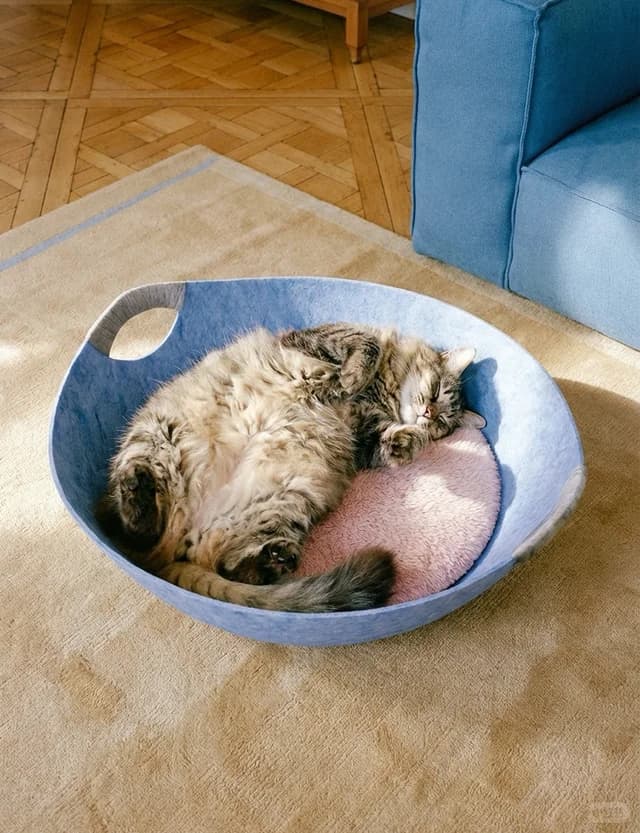
Bowl Cat Bed
Premium woven felt bowl bed — your cat's favorite nap spot
Low stock: 0 left
 Only 0 left
Hexagon Cat Nest
Geometric hexagonal bed with built-in scratch surfaces
Low stock: 0 left
 Spring EditionOnly 0 left
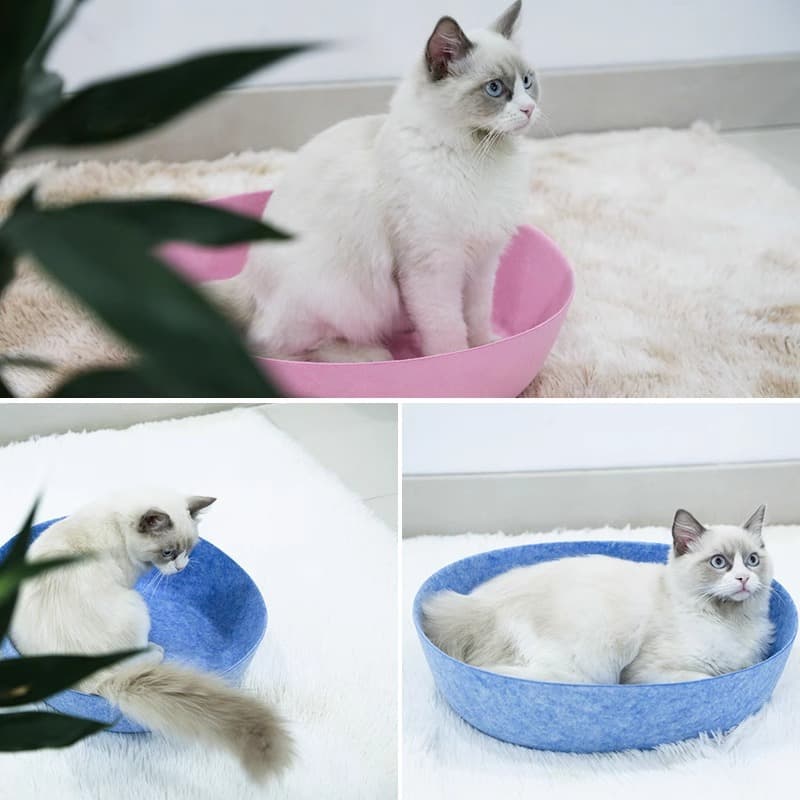
Pink Felt Bowl Bed
Spring edition blush pink bowl bed in premium felt
Low stock: 0 left