Cat Furniture for Renters: No-Drill Options That Actually Work
Drilling into walls costs renters an average of $50–$300 in deposit deductions. Here's how to give your cat climbing space, scratching options, and cozy nooks — with zero holes in the drywall.
The average security deposit in the US is between one and two months' rent. Wall damage — including bracket holes from mounted cat furniture — is one of the most common reasons landlords withhold deposit funds. A standard wall-mounted cat shelf installation requires four to eight lag screws into studs, leaving holes that cost $50–$300 to repair in most markets. If you're renting, that's a real financial calculation, not just an inconvenience.
But the alternative — giving your cat no vertical space, no dedicated scratching surface, and no territory of their own — creates behavioral problems that cost even more: shredded furniture, chronic stress, and redirected aggression. Here's how to give your cat what they need without touching the walls.
Why Cats Need Vertical Space (Even in Rental Apartments)
Vertical territory is not a luxury for indoor cats — it's a welfare need. The AAFP Five Pillars of a Healthy Feline Environment explicitly include "opportunity for play and predatory behavior" and "access to elevated resting areas" as core environmental requirements. Cats use height to monitor their territory, feel safe from threats, and regulate social interactions with other pets or people.
A cat without vertical access in a small apartment is a stressed cat. That stress typically manifests as over-grooming, inappropriate elimination, inter-cat aggression in multi-cat homes, and increased destructive scratching — on your furniture.
No-Drill Solutions That Actually Work
Freestanding Scratchers and Cat Trees
The most straightforward solution is a quality freestanding scratcher that doesn't require wall anchoring. The keys to making this work:
- Base-to-height ratio — For a freestanding unit to be stable without wall anchoring, the base should be at least 60% as wide as the unit is tall. A 40-inch scratcher needs at least a 24-inch base.
- Heavy base construction — Bases with solid wood or concrete cores are more stable than hollow particleboard. Some manufacturers sell weighted base add-ons specifically for renters.
- Corner placement — Placing a freestanding cat tree in a room corner adds two contact surfaces that dramatically increase stability without any wall penetration.
Tension-Mounted Systems
Tension rod systems use a spring mechanism to press against floor and ceiling, holding the unit in place without screws. They work well in rooms with standard 8–9 foot ceilings and can support surprisingly heavy loads when properly tensioned. Check that the ceiling contact point is padded — unprotected metal against a textured ceiling can leave marks.
Furniture-Adjacent Mounting
Cat shelves and scratchers can be attached to furniture rather than walls using furniture clamps, L-brackets bolted to bookshelf uprights, or purpose-built furniture clips. A heavy bookcase provides a very stable mounting point for a sisal panel — more stable than a typical wall mount, because a properly weighted bookcase has more mass than a set of wall screws.
Flat Scratchers and Horizontal Options
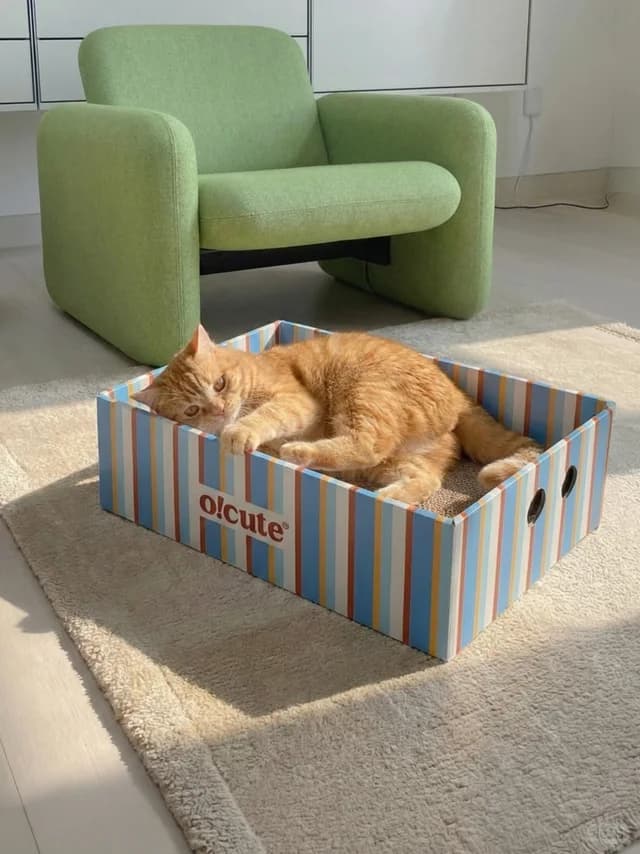
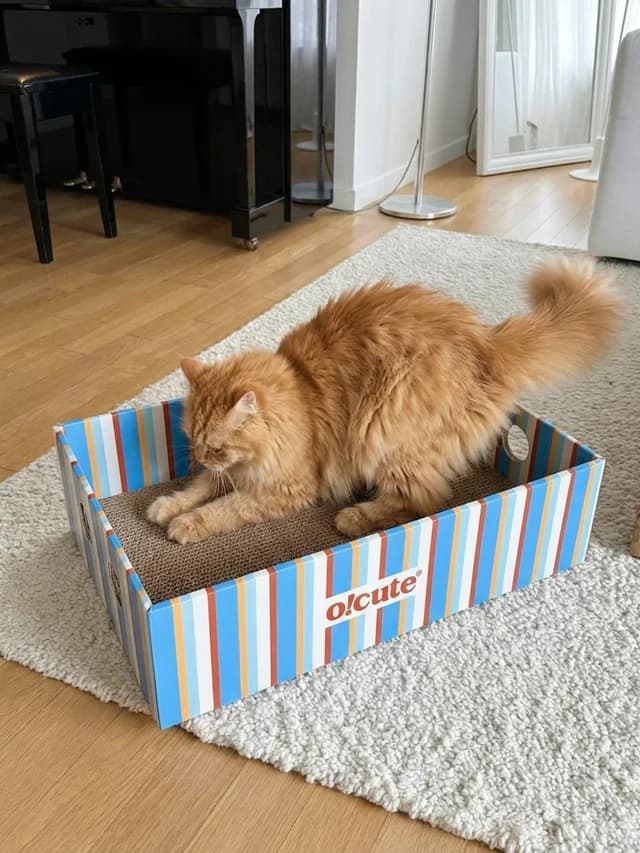
Horizontal scratchers require no installation whatsoever and handle a significant proportion of feline scratching needs. Our Striped Scratch Box and 3-in-1 Scratch Box are freestanding cardboard scratchers that can be placed anywhere — beside the sofa, in front of a chair, or near a doorway. No wall contact, no hardware, no deposit risk.
Creating Vertical Space Without Drilling
Even without wall shelves, you can create meaningful vertical territory for your cat:
- Clear bookshelf surfaces — Cats treat bookshelves as cat furniture whether you intended that or not. Clearing the top shelf of a sturdy bookcase and adding a small bed creates a high resting point with zero modification.
- Window perches with clamp mounts — Window perches that clamp onto the window sill (not the wall) give cats a high vantage point and access to bird-watching — one of the most effective enrichment activities for indoor cats.
- Cat-accessible furniture arrangement— Arrange furniture in "stepping stone" patterns: sofa → side table → bookcase creates a climbing path that uses existing furniture as the vertical structure.
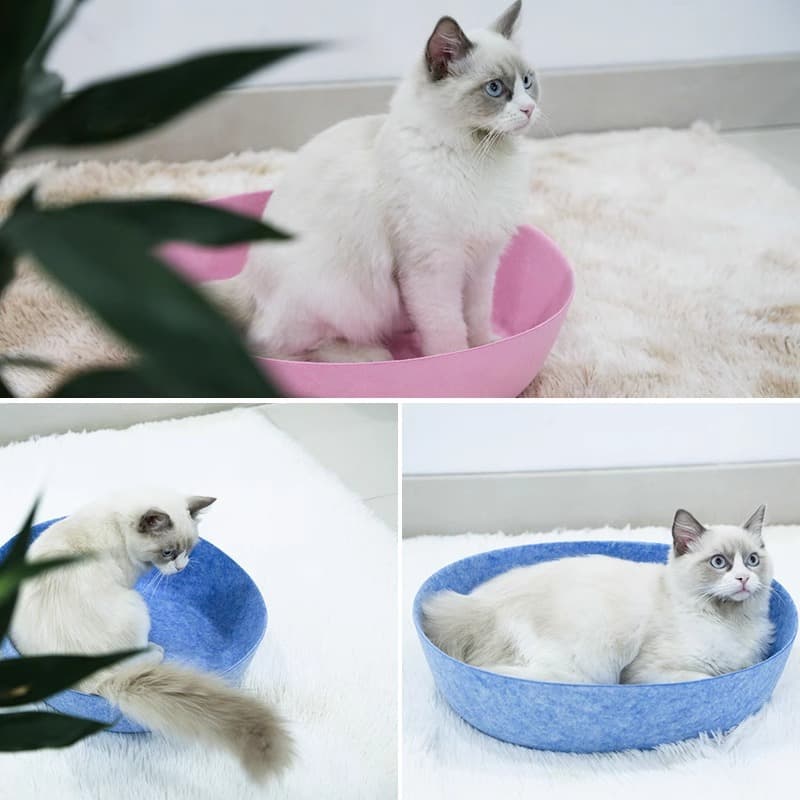
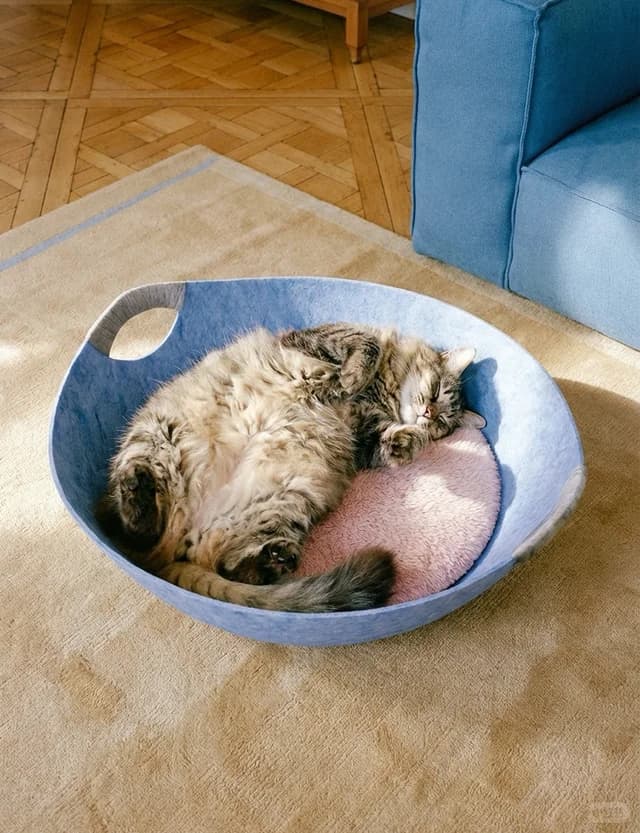
- A quality floor-level bed in a high-value location — Not every cat needs to be high up. Many cats prioritize proximity to their human over elevation. Our Bowl Cat Bed placed beside the sofa or at the foot of the bed gives a territorial anchor point without requiring any vertical installation.
The Lease Review Step Most Renters Skip
Before assuming you can't drill: read your lease carefully. Many leases restrict "permanent alterations" but explicitly permit standard picture-hanging holes. A common interpretation is that holes under 1/4 inch diameter — the size left by a standard lag screw — are acceptable and covered by normal wear and tear. In some states, normal wear and tear is legally protected regardless of lease language.
If you're unsure, email your landlord in writing asking specifically whether wall anchors for cat furniture are permitted. Written permission is your best protection — and many landlords say yes.
Common Mistakes
- Buying a short, unstable cat tree to avoid the wall anchor issue, then finding it tips anyway. Instability is worse than drilling — a tipping cat tree creates fear and aversion. Spend more for a wider base or use corner placement.
- Using command strips for heavy cat furniture. Command strips are designed for picture frames — typically rated to 5–16 lbs static load. A cat jumping onto a shelf exerts 3–4x their body weight in dynamic force. This is not a safe load path.
- Forgetting horizontal scratching needs in the no-drill setup. Renters often focus on the vertical furniture problem but skip scratchers entirely. A cat without a designated scratch surface will use yours.
Renting doesn't mean your cat has to live in a stripped-down environment. It means choosing furniture that's self-supporting, versatile, and thoughtfully placed. Your cat won't know the difference — and your landlord won't either.
Sources & Further Reading
- Ellis, S.L.H., et al. (2013). AAFP and ISFM Feline Environmental Needs Guidelines. Journal of Feline Medicine and Surgery, 15(3), 219–230.
- Apartment List Research (2023). Security Deposit Study: How Much Are Renters Paying?
- Herron, M.E. & Buffington, C.A.T. (2010). Environmental enrichment for indoor cats. Compendium, 32(12), E4.
Products Mentioned
PopularOnly 0 leftStriped Scratch Box
Colorful striped box with corrugated scratch pad inside
Low stock: 0 left
 Only 0 left
3-in-1 Scratch Box
Scratcher + bed + play box in one colorful package
Low stock: 0 left
 Best SellerOnly 0 left
Bowl Cat Bed
Premium woven felt bowl bed — your cat's favorite nap spot
Low stock: 0 left