How to Stop Your Cat from Scratching Furniture (7 Fixes That Actually Work)
Scratching isn't bad behavior — it's a biological need. The secret to saving your sofa is understanding why cats scratch and giving them a better option.
Walk into any cat owner's living room and you'll probably find it: a sofa arm with a few too many loose threads, a rug corner that looks chewed, or a table leg that's slowly losing its finish. Cat scratching is one of the most common frustrations of living with a cat — and also one of the most misunderstood.
The good news is that you almost never need to punish a cat to get them to stop. Once you understand why cats scratch in the first place, most of the fix comes from giving them a better option.
Why cats scratch (it's not what you think)
Cats don't scratch your couch because they're being destructive. Scratching is a biological behavior with at least four purposes:
- Claw maintenance. Scratching pulls off the old outer sheath of the claw, revealing the sharp new claw underneath. Without it, claws overgrow and get uncomfortable.
- Scent marking.Cats have scent glands in their paws. Scratching leaves both a visual mark and a smell — a way of saying "this is mine."
- Stretching. A full-body scratch is how cats stretch their back and shoulders. It feels as good to them as a yawn and stretch does to you.
- Emotional release.Cats scratch more when they're excited, stressed, or just woken up. It's a way to discharge energy.
Once you know this, you can stop asking "how do I make my cat stop scratching" and start asking the more useful question: where can I get my cat to scratch instead?
Fix 1: Put scratchers where your cat already scratches
The single biggest mistake owners make is putting the scratching post in a corner where no one goes. Cats scratch in social, visible places on purpose — remember, it's also about marking. If your cat scratches the side of the couch, put a scratcher right next to that spot. If they scratch the door frame, put a wall scratcher on that frame.
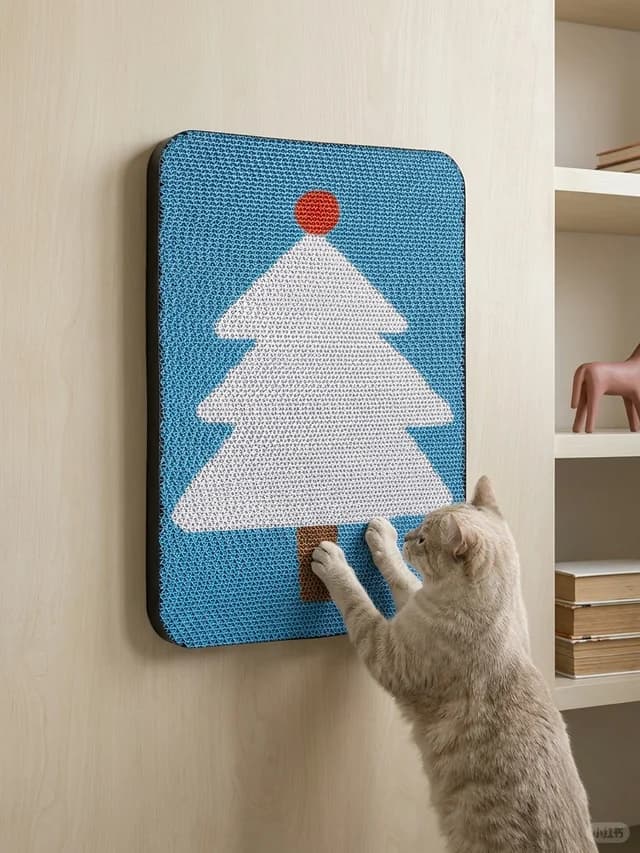
A wall-mounted tree scratcher is particularly effective here because you can mount it at the exact height your cat is already trying to reach on your wall.
Fix 2: Match the scratching direction
Not all cats scratch the same way. Some are horizontal scratchers (rugs, carpet) and some are vertical (couch backs, walls). A few are both. Watch your cat for a day or two and note which direction they go.
- Horizontal scratchers do best with flat scratch boxes like our Striped Scratch Box or 3-in-1 Scratch Box.
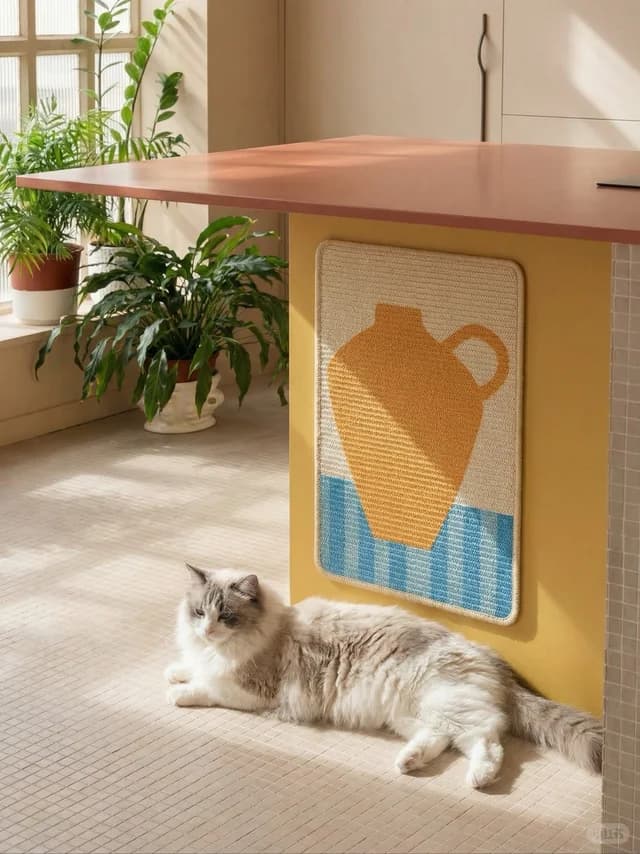
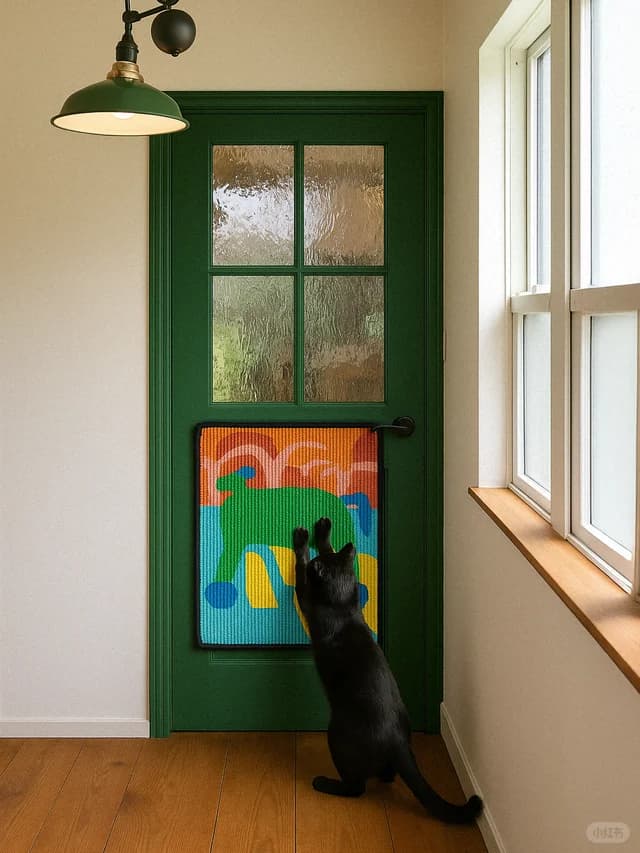
- Vertical scratchers need tall posts or wall-mounted options like the Sisal Wall Mat.
Buying the wrong direction is why most scratching posts end up ignored. Your cat isn't stubborn — it's the wrong tool.
Fix 3: Pick the right material
Cats have strong opinions about texture. The three materials that work for most cats are:
- Sisal rope or fabric — rough, fibrous, and satisfying. Most popular with adult cats.
- Corrugated cardboard — cheap, replaceable, and very popular with kittens and playful cats.
- Carpet — avoid this if possible. It teaches cats that carpet = okay to scratch, which backfires.
Fix 4: Make the couch less appealing
While you're redirecting the behavior, make the wrong spot temporarily unattractive. A couple of tricks:
- Drape a cheap sheet over the scratched arm of the couch for a week.
- Stick double-sided tape strips on the target area (cats dislike the feel).
- Spray citrus or eucalyptus cleaner nearby — most cats dislike the smell.
These aren't permanent fixes. They just make the new scratcher relatively more attractive for the few weeks it takes to form the new habit.
Fix 5: Trim claws every 2–3 weeks
Regular claw trims don't stop scratching, but they significantly reduce damage. A pair of cat-specific clippers and a calm 60 seconds every couple of weeks is enough. Trim only the sharp, clear tip — not the pink quick.
Fix 6: Use multiple scratchers
One scratcher is never enough for a multi-room apartment. Aim for at least one per main room your cat spends time in. It sounds excessive until you realize it's still way cheaper than replacing a sofa.
Fix 7: Never punish scratching
Spraying with water, yelling, or physically moving your cat when they scratch teaches them to scratch when you're not around. It doesn't stop the behavior — it just hides it. Redirect calmly, reward them when they use the right spot, and be patient.
How long does this take?
Most cats switch to a new scratcher within 1–2 weeks if it's placed well and the material matches their preference. Older cats can take longer, but the pattern is the same: right spot, right material, right direction.
Save the couch. Give your cat a better option.
Products Mentioned
NewOnly 0 leftTree Wall Scratcher
Christmas tree-shaped knitted wall scratcher — functional wall art
Low stock: 0 left
 Only 0 left
Sisal Wall Mat
Designer striped wall-mounted sisal scratching mat
Low stock: 0 left
 PopularOnly 0 left
Striped Scratch Box
Colorful striped box with corrugated scratch pad inside
Low stock: 0 left