Cat Enclosures for Safe Outdoor Access: A Complete 2026 Guide
Indoor cats live twice as long as outdoor cats on average — but they still need outdoor stimulation. A well-designed cat enclosure gives both, without the risks of free-roaming.
The average lifespan of an exclusively indoor cat is 12–18 years. Free-roaming outdoor cats average 2–5 years. That gap reflects road traffic, predators, disease exposure, and territorial fights — risks that don't exist inside. But indoor cats that never experience outdoor air, sun, moving leaves, and live insects show measurably higher rates of stress-related behavior, obesity, and boredom-driven destructiveness.
A cat enclosure — a catio, in the hobbyist lexicon — resolves the contradiction. Your cat gets outdoor access with none of the free-roaming risks.
Types of Cat Enclosures
Window box catios attach to a window opening and project outside the home — essentially a box with wire mesh walls and floor. The cat accesses it through the open window. Best for renters or apartment dwellers with limited exterior space. A typical window box catio is 3–4 feet deep with a 2×3 ft footprint. Installation usually requires a few screws into the exterior window frame — minimal damage.
Attached lean-to catios are larger structures built against an exterior wall, connected to the home via a cat door or window modification. Common sizes run 6–12 feet long and 3–6 feet wide. These can accommodate shelves, perches, plants, and multiple cats simultaneously. The cat gets genuine outdoor exposure — sun, wind, smells — in a fully enclosed space.
Freestanding garden catios are separate structures in the yard connected to the home by a tunnel. The tunnel can run 20–30 feet, allowing the catio to be positioned anywhere in the yard. The most expensive option but also the most enriching — large catios can include live plants, climbing structures, and even small ponds.
Cat tunnels and corridors are the most flexible option for established yards. A series of mesh tunnels allows the cat to travel through specific areas of the garden — along fences, through shrubs — without free-roaming access to hazards. Modular tunnel systems can be reconfigured as needed.
Materials and Construction
For permanent installations, welded wire mesh (1"×1" or 2"×2" openings, 16-gauge or heavier) significantly outlasts PVC-coated chicken wire. Avoid chicken wire — it corrodes within 2–3 years in outdoor conditions and can develop sharp edges.
Wood framing should be cedar or pressure-treated lumber. Pine rots within 3–5 years in contact with ground moisture. Roof the structure with solid panels (polycarbonate or metal roofing) on at least one third of the area to provide rain shelter and a dry sunny spot.
What to Include
At minimum: a sheltered area, elevated perches at different heights, a scratching surface, and a litter box if the cat will spend more than an hour at a time outside. Add cat-safe plants (valerian, catnip, lemongrass, cat grass) for additional enrichment. A bird feeder positioned just outside the mesh provides hours of visual stimulation.
Safety Checks
Inspect all mesh connections monthly for sharp wire ends. Check the perimeter of any ground contact for burrowing gaps — foxes and raccoons will test weak points. Ensure no toxic plants are within reach through the mesh. Provide shade — a fully exposed catio in direct summer sun can reach dangerous temperatures within 30 minutes.
Sources & Further Reading
Products Mentioned
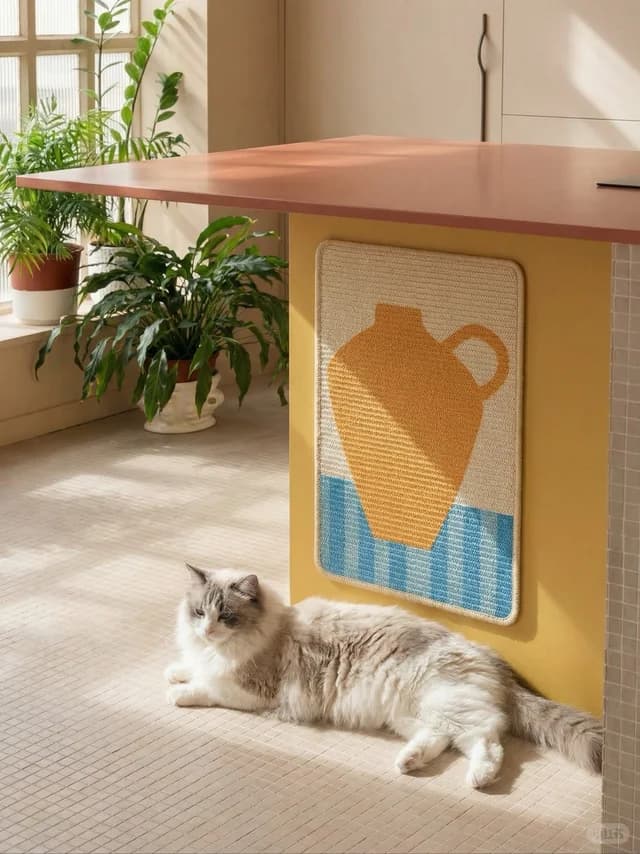 Only 0 left
Sisal Wall Mat
Designer striped wall-mounted sisal scratching mat
Low stock: 0 left
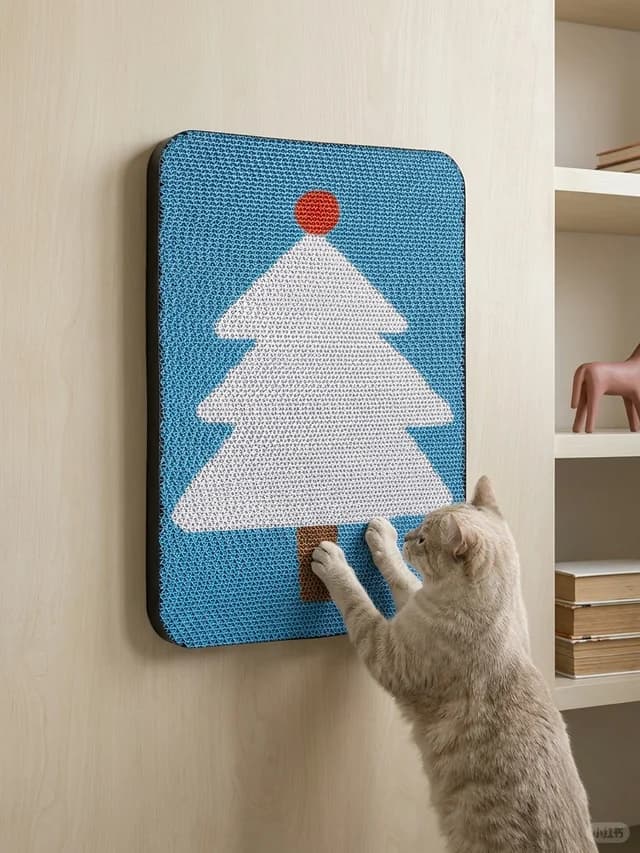 NewOnly 0 left
Tree Wall Scratcher
Christmas tree-shaped knitted wall scratcher — functional wall art
Low stock: 0 left
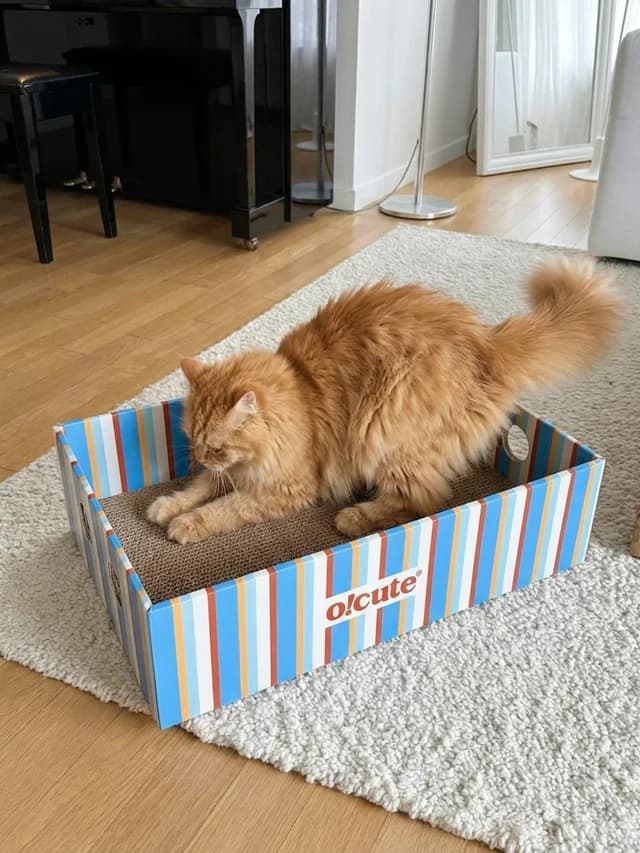 Only 0 left
3-in-1 Scratch Box
Scratcher + bed + play box in one colorful package
Low stock: 0 left