Floor-to-Ceiling Cat Trees: The Ultimate Space-Saving Vertical Solution
A floor-to-ceiling cat tree gives your cat 8+ feet of vertical territory in 2 square feet of floor space. For apartments where you can't drill into walls, it's the best vertical option available.
Floor-to-ceiling cat trees — also called tension pole cat towers or ceiling-mounted cat trees — use an extending post that creates pressure against both the floor and ceiling. No drilling, no wall damage, no landlord issues. For apartments and rentals, they're the best way to add serious vertical territory for a cat without permanently modifying the space.
How tension poles work
The central post of a floor-to-ceiling tree is a spring-loaded or screw-extended cylinder. You compress it slightly, position it vertically, then extend it until both the floor pad and ceiling pad make firm contact with the surfaces. Friction holds everything in place — no hardware required. A properly installed tension pole tree is remarkably stable, even when a large cat launches from the top platform.
One thing most owners get wrong: the ceiling pad must contact the ceiling with real pressure, not just touch it lightly. If the pole can be moved with moderate hand force, it isn't tight enough. Extend it until you can feel genuine resistance and the unit doesn't budge when pushed.
Height and vertical territory
A standard 8-foot ceiling gives you approximately 7.5 feet of usable cat space — accounting for floor pads and ceiling clearance. Most floor-to-ceiling trees include 3-5 platforms at varied heights, which cats treat as distinct territory levels. In multi-cat households, this vertical stratification can reduce conflict: dominant cats claim the highest perch, subordinate cats use lower levels, and they can coexist without direct confrontation.
The floor footprint is typically 14-20 inches square — less than a standard cat tree, more than a wall-mounted shelf system, and with far more cat-territory value per square foot than either.
What to look for when buying
- Weight capacity — Look for at least 30 lbs, even if your cat is lighter. The rating accounts for dynamic load (a cat jumping onto a platform), not just static weight.
- Ceiling pad material— Rubber or felt pads that won't scratch the ceiling. Avoid bare plastic.
- Platform size — Minimum 12 inches diameter for an average cat, 16 inches for large breeds. Tiny platforms force cats to balance rather than rest comfortably.
- Sisal vs. carpet posts — Sisal-wrapped posts are the better choice for the same reasons as in regular cat trees.
- Ceiling height range — Most units accommodate 7-10 foot ceilings. Verify the unit extends to your ceiling height before ordering.
Is it right for your home?
Floor-to-ceiling trees are ideal for: apartments where wall drilling isn't allowed, rooms with a clear vertical path away from light fixtures, multi-cat homes where vertical territory reduces conflict. They're less ideal for homes with textured or plaster ceilings (the ceiling pad may not distribute pressure evenly), ceilings under 7 feet, or large cats over 25 lbs that generate significant landing impact.
Sources & Further Reading
Products Mentioned
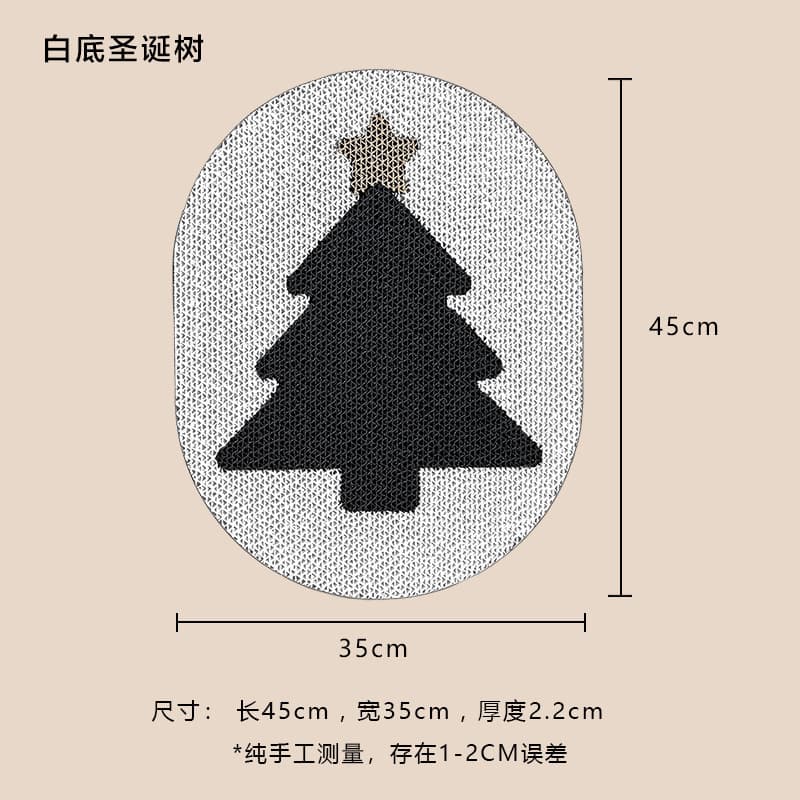
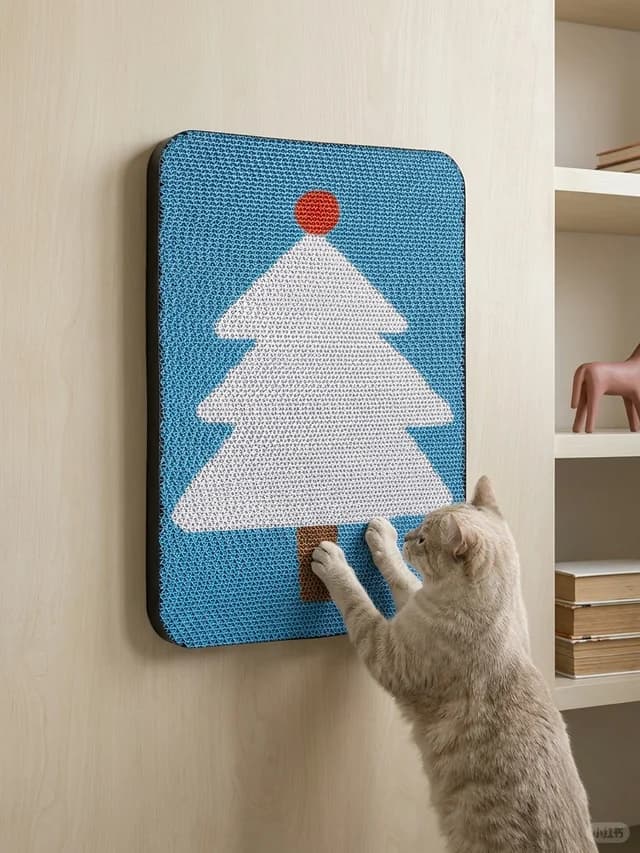
NewOnly 0 leftTree Wall Scratcher
Christmas tree-shaped knitted wall scratcher — functional wall art
Low stock: 0 left
 Only 0 left
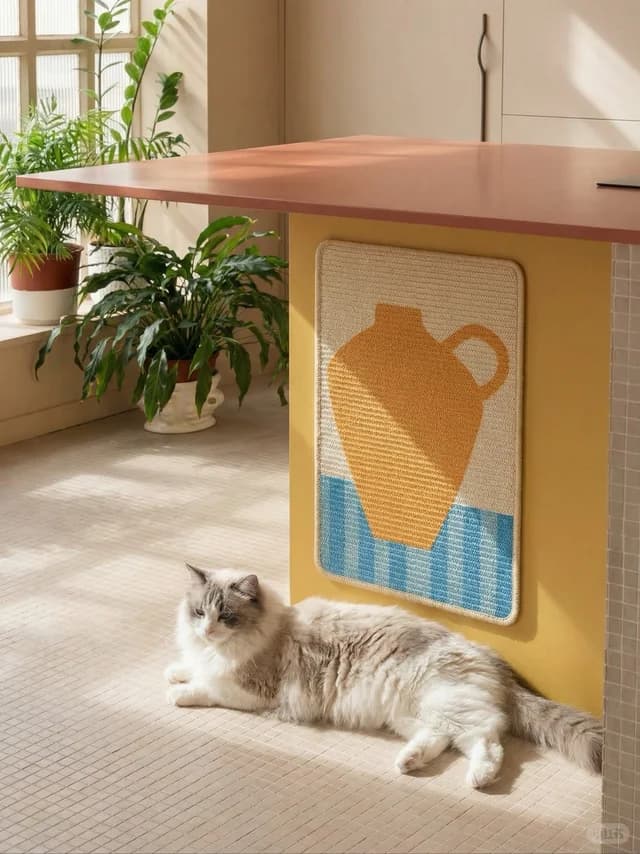
Sisal Wall Mat
Designer striped wall-mounted sisal scratching mat
Low stock: 0 left
 Only 0 left
Hexagon Cat Nest
Geometric hexagonal bed with built-in scratch surfaces
Low stock: 0 left